The Crisis of Relevance: Why Gen Z is Asking, ‘When Will I Ever Use This?’
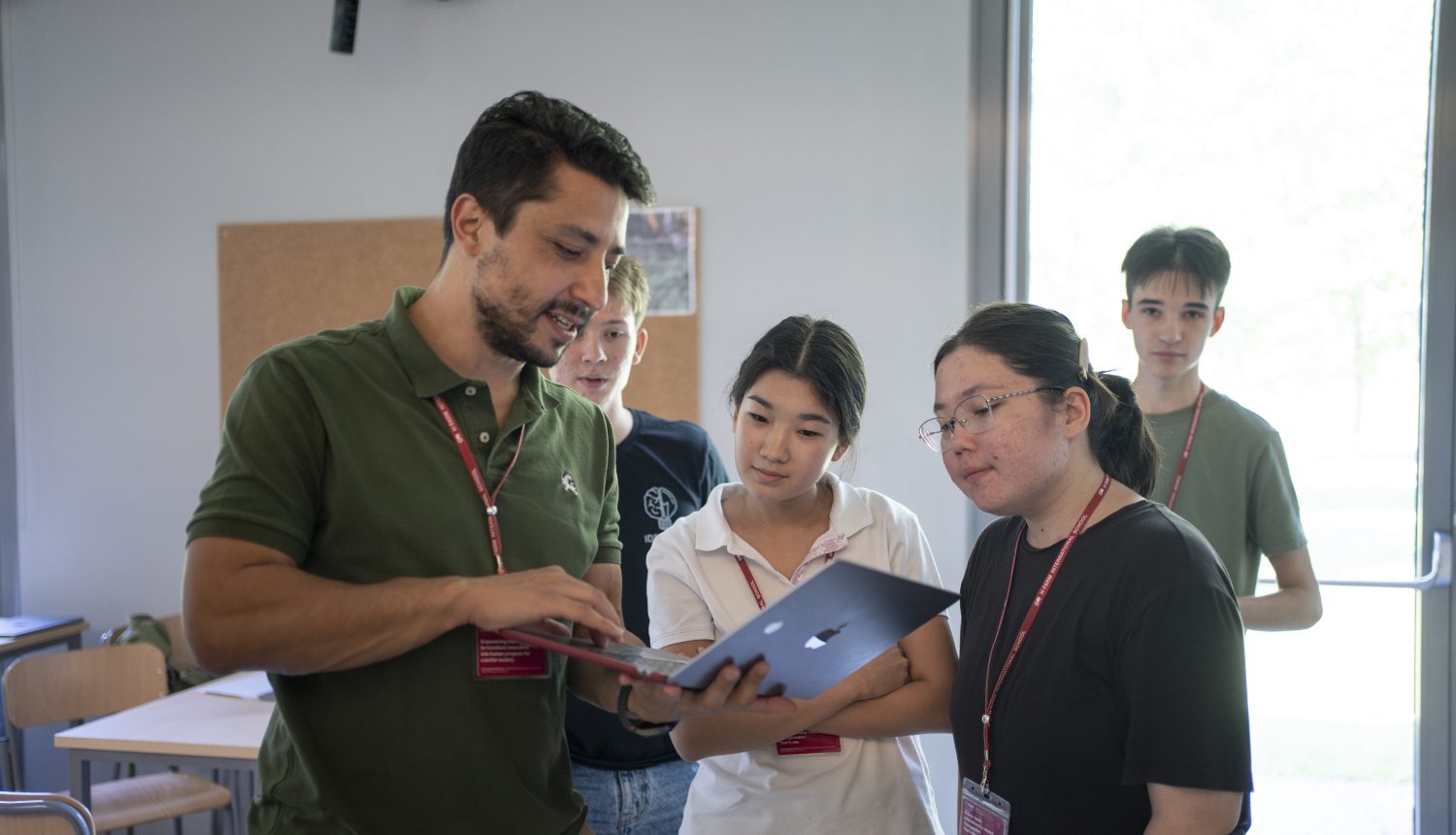
Written by Antonello Barbaro, CEO of H-FARM International School
Walk into any Upper Secondary school today, and the air is thick with anxiety about the future. The pressure is on to choose a path: STEM or bust. Driven by economic fear and the relentless march of AI, parents and policymakers worldwide are pushing students toward hyper-specialization, often arguing, as the saying goes, that “Mathematics is the language of the universe, and everything else is just commentary.”
But in a world where foundational coding and data analysis are rapidly becoming commoditized or automated by AI, our students are right to be asking: If I dedicate two years to specializing, will my niche knowledge still be relevant when I graduate from university?
This is the Crisis of Relevance, and it forces us to re-examine what Upper Secondary education should prioritize: narrow, deep knowledge, or broad, interdisciplinary competence.
The Myth of the STEM-Only Leader
The argument for pure STEM specialization is compelling: the World Economic Forum consistently lists technological skills like AI, Big Data, and Cyber Security as top priorities.
However, the same reports emphasize that the skills rising fastest in demand are Creative Thinking, Resilience, Flexibility, and Leadership, skills traditionally refined in the humanities and interdisciplinary studies.
A 2019 analysis of the undergraduate backgrounds of Fortune 50 CEOs found an even split between STEM, Liberal Arts, and Business majors.
The data suggests that technical skill gets you the entry-level job, but critical thinking, communication, and ethical reasoning, the core outputs of the humanities, are what drive a career to the executive level.
The Power of Interdisciplinary Synthesis
The mistake is framing this as a binary choice between STEM or Humanities. We at H-FARM International School believe the future demands STEM and Humanities.
The IB Diploma Programme (DP) exemplifies this interdisciplinary imperative. It mandates that students maintain a broad base of six subjects, including sciences, languages, and the humanities, while forcing them to synthesize knowledge through core components:
- Theory of Knowledge (TOK): Teaches students how to know, why one field of knowledge is different from another, and the ethical implications of both science and history, the precise skills needed to govern an AI company or a national policy.
- Extended Essay (EE): A 4,000-word independent research paper that requires students to apply the rigorous methodologies of their chosen subject (whether Physics or History) to form a complex, sustained argument, a critical skill for any high-level professional.
This interdisciplinary structure is designed to avoid the “split brain” syndrome, ensuring that students who design the next AI algorithm also understand its sociological impact. As the World Economic Forum recommends, we must prioritize the “right mix of technical and human skills.”
- To students (Gen Z): If the greatest job security lies in being able to solve problems that don’t yet exist, are you better off with specialized knowledge that might quickly be automated, or with broad, creative skills that allow you to adapt to any challenge?
- To parents: Is your relentless pressure for a STEM degree inadvertently steering your child away from the very “human skills” that will ultimately determine their leadership potential, ethical compass, and long-term career resilience?
- As school leaders: Is a highly specialized curriculum truly preparing our students for a world of complexity, or is it a defensive mechanism against a rapidly changing world? How are we embedding compulsory TOK-style reflection into every subject, from advanced calculus to classical literature?
The diploma of the future must prove a student can not only master knowledge but also question, connect, and communicate it across disciplines. Anything less is a disservice to a generation that will live and work alongside machines.
The most complex roles in the world are not just about algorithms or profit margins; they are fundamentally about human systems, communication, ethical trade-offs, and critical reasoning, the very intellectual muscles a philosophy or humanities education trains.
As Sergio Marchionne, the philosophical engineer who saved two automotive giants, aptly proved, the ability to think clearly about complex, ill-defined problems is the highest form of professional value.
Let me challenge you for a second:
- If the people leading the world’s most technical and political organizations often have a humanities background, why are we telling our children that specialization is their only future?
- Is our education system training technicians, or philosophers with the capacity to lead?
just out fo curiosity here below a longer list of Leaders with a Core Philosophy or Humanities Background




 Back
Back

