Personal Project Exhibition 2025: Innovation, AI, and Creativity at H-FARM International School
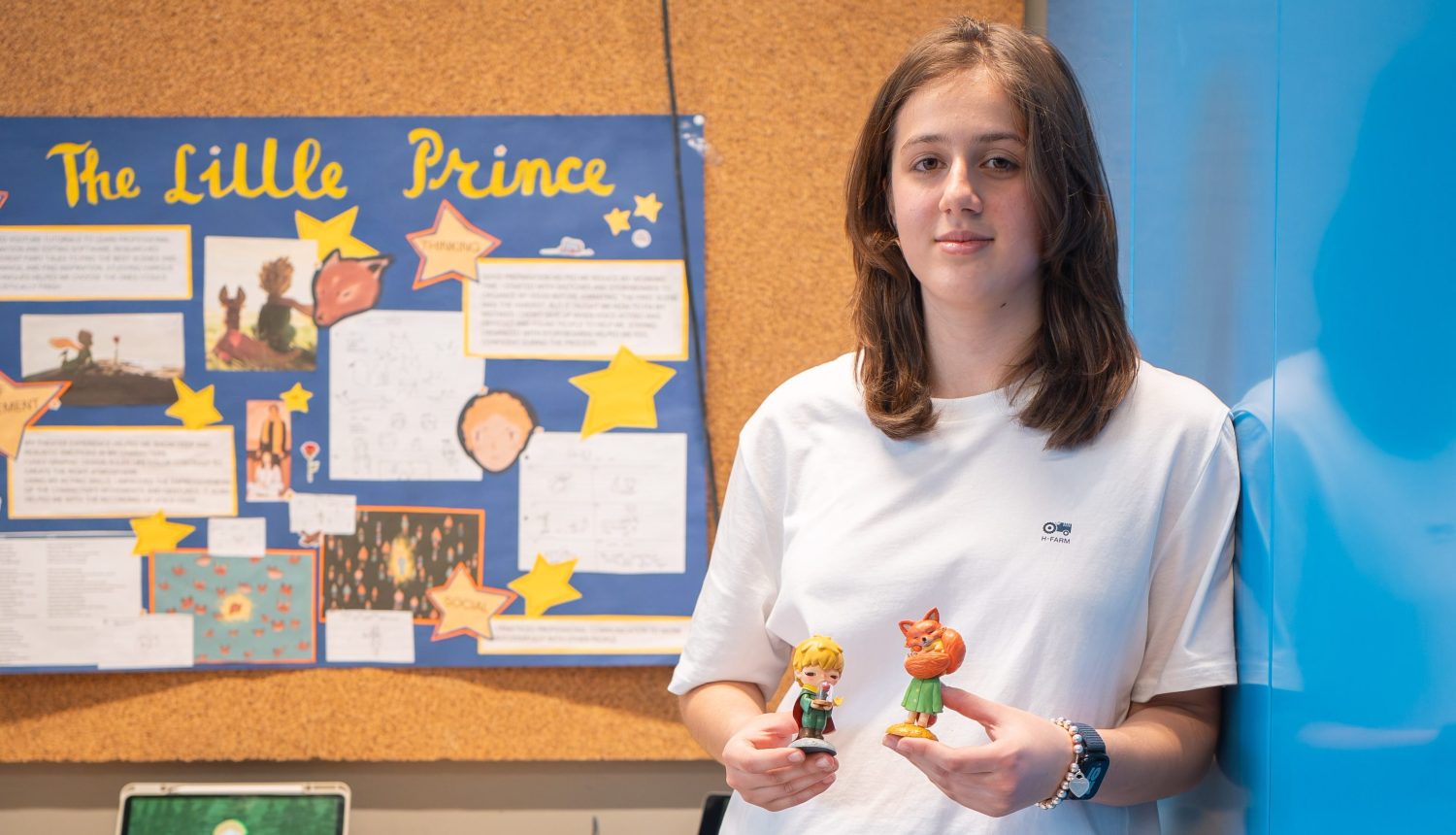
At just 15, can you really train a machine learning model to predict the outcome of a Formula 1 race? Or build a 3D-printed robot that answers questions using artificial intelligence? Or even imagine satellites capable of protecting Earth’s magnetic field?
If your first thought was, “I can’t,” it’s only because you haven’t met our students yet.
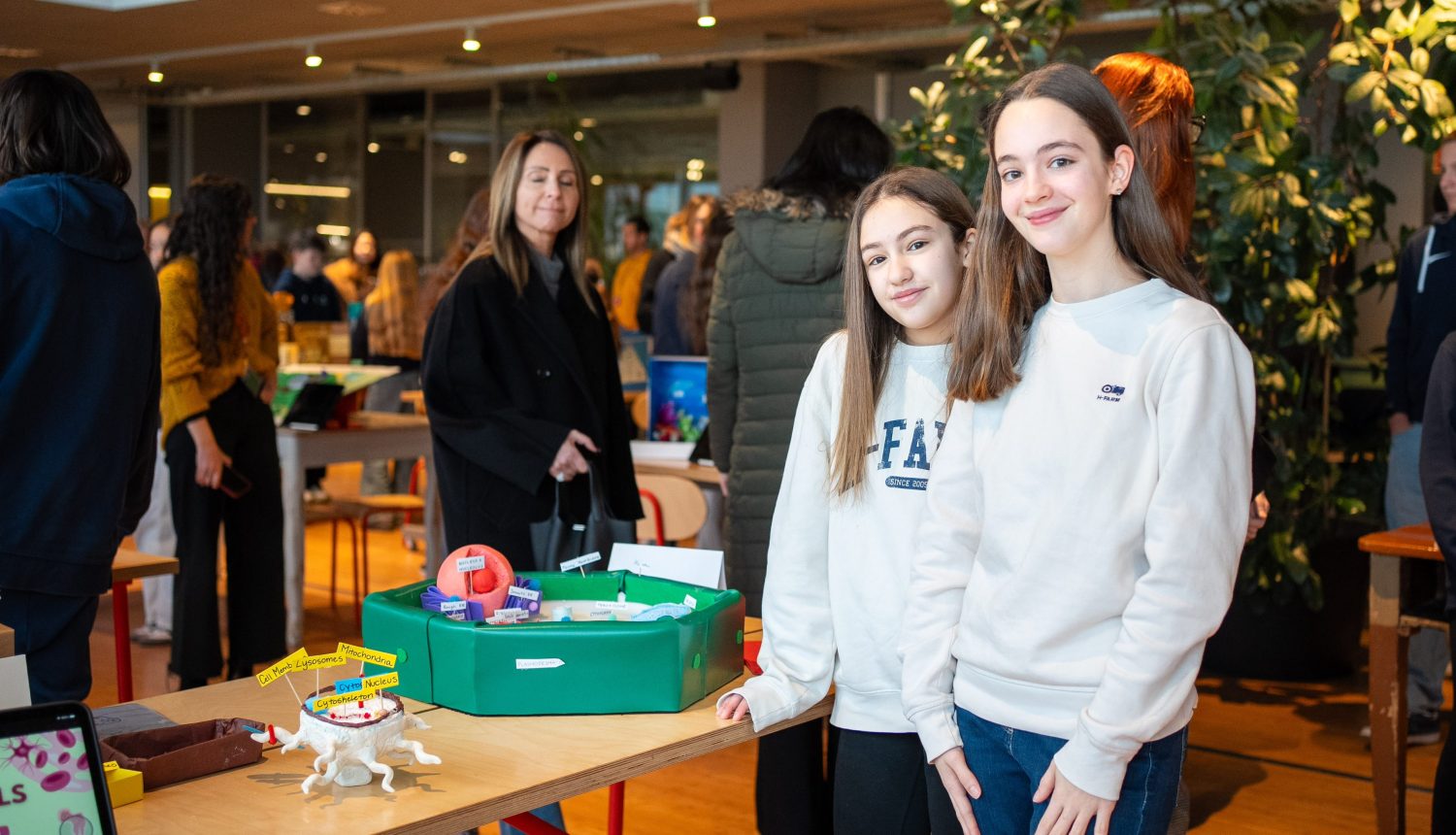
At the annual exhibition dedicated to the Personal Project, everything you thought was impossible became reality. These weren’t rhetorical questions, but real projects conceived and built by our MYP5 students after months of intensive work, research, design, testing, revisions, and inevitable moments of difficulty. And today, at last, they presented the results of their commitment to the entire school community.
The Personal Project, beyond being the final and most significant assessment of the entire Middle Years Programme, is far more than a concluding assignment. It is a testing ground where students learn how to conduct structured research, manage time and resources, document decisions, and evaluate what works and what needs improvement. It is a concrete exercise in responsibility and critical thinking that prepares them for the challenges of the IB Diploma and, more broadly, for turning complex ideas into actionable outcomes.
Some students look to the future of technology with excitement but also with a critical eye. Ashton, for example, built a fully functioning robotic T-800, 3D-printed, wired, and soldered piece by piece, with an AI system running locally on a Raspberry Pi. His project is not an exercise in style; it is a reflection on AI safety. “Artificial intelligence is advancing rapidly, and we don’t fully understand it yet,” Ashton explains. His robot, capable of facial recognition and voice responses, serves as a warning: what might happen if increasingly autonomous systems were placed in decision-making roles without adequate regulation? Through CAD design, 3D printing, soldering, and computer vision models, Ashton combined technical expertise with ethical reflection, demonstrating how innovation and responsibility must go hand in hand.
Lorenzo also chose artificial intelligence, but applied it to the world of sport. He developed a machine learning model based on Random Forest capable of predicting the results of Formula 1 races, analyzing more than 3,000 data points and over 6,000 lap times from 2022 to 2025. His algorithm runs 5,000 simulations per race, calculates correlations, weighs factors such as qualifying performance, tire degradation, and sprint races, and outputs probability percentages. Not only that: he created a dedicated website, published in-depth articles, and even collaborated with Alessandro Rastrelli, a Formula 1 content creator, on a pre-race analysis of the final Grand Prix that decided the championship. His prediction? Correct.
Technology, however, is not only about performance and computation. It can also be about protection. Olena envisioned a constellation of magnetic satellites designed to help stabilize Earth’s magnetic field. Her concern begins with a radical question: what would happen if we lost it? Her project explores theoretical solutions, technological limitations, and costs, but above all demonstrates deep environmental awareness. It shows how the Personal Project encourages students to engage with global challenges, even when the solutions seem ambitious or futuristic.
Ambition was equally evident in Dmytro’s project: building a drone entirely from scratch. A mission planner programmed via Arduino and ArduPilot, autonomous flight modes, face tracking through an ESP32-S3 camera, a complex project tested by delayed components and logistical challenges. Yet growth often emerges from complications. His journey illustrates what it means to adapt, find alternative solutions, and recalibrate goals without losing motivation.
Alongside technology-driven projects, others placed the human dimension at the center.
Harper created It’s Not Just You, a podcast dedicated to adolescent mental health. Starting from interviews with counselors and peers, she addressed topics such as academic pressure, anxiety, and feelings of inadequacy. “I realized that it’s not just one person experiencing these things, many of us are,” she explains. Her goal is not to offer diagnoses or ready-made solutions, but to normalize the conversation, reduce stigma, and remind listeners that their feelings matter. In an era when one in five adolescents faces mental health challenges, creating a space for listening is already an act of responsibility.
Sofia, through her fashion collection Undressed, also confronts stigma by translating eight mental health disorders into garments and design details. Her aim is to “lay bare” realities that are often misunderstood, shifting the perspective from fear to knowledge, from judgment to complexity.
Aglaya takes the narrative into even more intimate territory: a book of poems inspired by the stories of people who have experienced cancer, with texts dedicated to the different stages of the journey. The project stems from a personal motivation: “My grandmother fought cancer for nine years… so I decided to dedicate this project to her,” she explains. Through interviews with patients, oncologists, and family members, and a desire to connect art with tangible social impact, her work transforms memory into awareness.
A common thread across diverse worlds
From robots to poetry, from datasets to adolescent vulnerability, what unites these projects is the same core competence: beginning with an authentic question, shaping it methodically, supporting it with research, and ultimately sharing it with an audience.
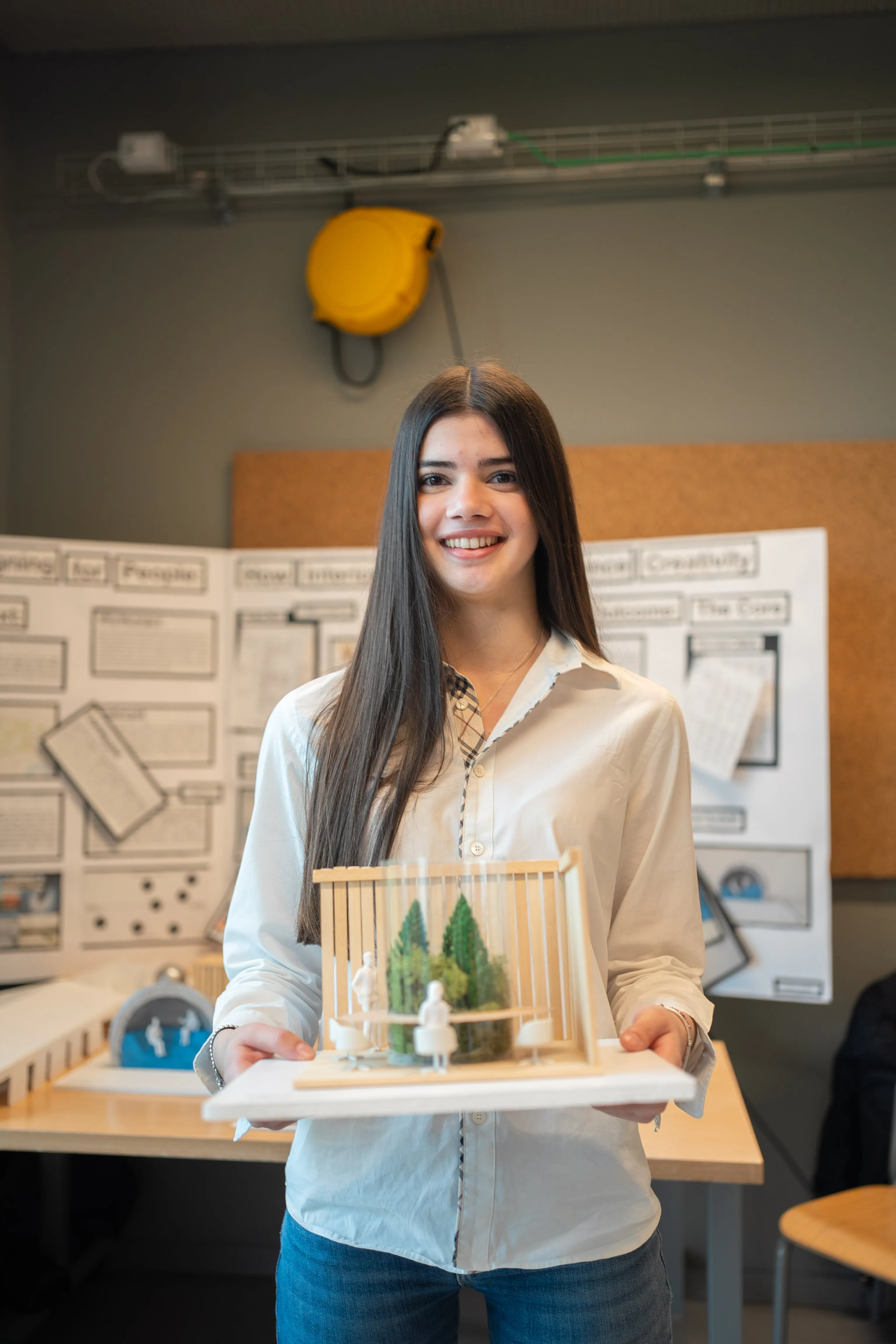
Among the other projects presented today: an electrolyzer with 3D-printed models exploring electrolysis and the future of hydrogen; redesigned interiors and classroom spaces based on interviews and digital prototypes to improve how these environments are experienced; videos explaining economic concepts such as creative destruction; a charity volleyball event combining fundraising and audiovisual storytelling; web platforms for retail training; gluten-free cookbooks designed for people living with celiac disease; 3D design and modeling projects related to architecture and hospitality; videos explaining ADHD to peers; and recipe guides focused on equine nutrition and well-being.
An event, but above all, a milestone.
The Personal Project Exhibition 2026 is a key moment for H-FARM International School because it makes visible what often remains behind the scenes: months of serious work, thoughtful decisions, countless trials, errors, revisions, and the ability to balance creativity with rigor. It is a meeting point for students, teachers, families, and the wider community, where every project becomes a story of growth.
And perhaps this is the strongest message of the day: what matters is not only what students have built, recorded, written, designed, or programmed. What matters is that, to arrive here, they learned how to lead a process and to present it with the confidence of someone who can say, “This is what I chose. This is what I learned. This is what I want to bring into the world.”







 Back
Back

