Pierluigi Fasano and “The Fourth Science. What Do You Think Is Impossible?”
What will remain impossible in a world where the major innovations of the coming years promise to rewrite energy, medicine, space, and artificial intelligence?
It is from this question that one of the most intense sessions in the journey toward Demo Night took shape for MYP4 students of the Startup Lab and DP students of H-FARM International School Venice. Not just a lecture, but a true intellectual challenge: to question the very idea of the “impossible.”
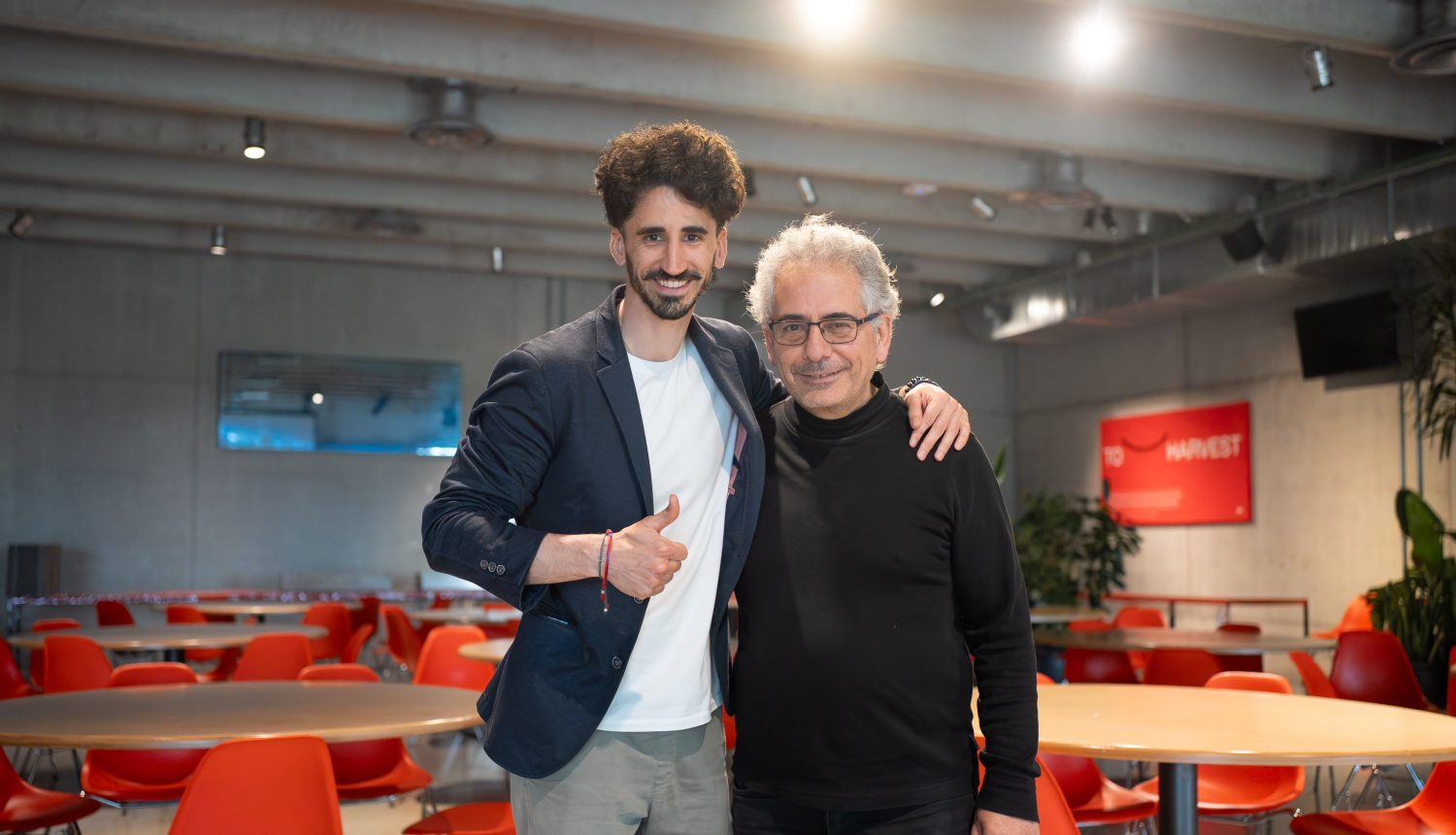
Leading it was Professor Pierluigi Fasano, a senior manager with over 25 years of experience in Enterprise Architecture and Technology Leadership in international contexts, from finance to pharma, now engaged in supporting major digital transformations and in the technological evaluation of startups. A profile that combines strategic vision and deep technical expertise, spanning innovation, change management, and the development of complex products and organizations.
It is precisely from this perspective that he built his talk, around an intuition as simple as it is radical: we are entering a new phase in the history of knowledge. A phase in which science no longer advances solely through observation, theory, or computational power, but through something different: artificial intelligence as an accelerator of discovery.
Fasano calls it “the fourth age of science.” After empirical science, theoretical science, and computational science, we are now entering an era in which machines do not merely execute instructions, but actively contribute to generating new knowledge. This is not a technical detail: it is a paradigm shift.
To make this concrete, the talk unfolded as a journey through some of the most profound transformations already underway, or on the verge of happening, within the lifetime of the students in the room.
It began with energy. The idea of replicating on Earth the process that powers the sun (nuclear fusion) is no longer just theory. If it became a reality at scale, it could make energy abundant, affordable, and clean. But the real question is not technological: what happens to the world when energy is no longer a scarce resource?
From there, the focus shifted to space. No longer just exploration, but expansion: infrastructure, data centers, even human settlements beyond Earth. A scenario that raises new, almost unprecedented questions: who owns space? Who sets the rules? And above all, who is left out?
The journey then moved into the heart of emerging technologies. Computers that no longer imitate binary logic, but the functioning of the human brain. Biological systems capable of learning. DNA used as a storage medium. Materials designed by artificial intelligence, lighter and stronger than anything created so far. Engineered bacteria to solve environmental problems such as plastic pollution.
And more: fully digital finance, algorithms managing global markets, quantum computers capable of solving in minutes problems that today would require unimaginable time. All the way to the most radical prospect of all: the possibility of intervening in aging, treating it no longer as an inevitable fate, but as a modifiable condition.
And yet, what makes this journey truly meaningful is not so much the list of innovations, but the way they force us to rethink the categories through which we interpret the future.
Faced with scenarios that until a few years ago would have seemed like science fiction, it is almost natural to stop at a sense of wonder. But it is precisely there that the conversation shifts direction: it is not enough to ask whether something is possible. The real question becomes understanding what happens when it actually becomes possible.
If energy ceases to be a limited resource, what form does global balance take? If artificial intelligence can accelerate knowledge at an unprecedented speed, what space remains for human thought? If life can be extended, modified, perhaps even “restored,” what does it mean to be human?
It is at this point that the future stops being a distant horizon and becomes something closer, almost urgent. Not a set of scenarios to observe, but a field of choices to inhabit.


E allora la domanda si sposta inevitabilmente: non più soltanto che cosa succederà, ma che cosa vogliamo che succeda. “qual è il mondo che vuoi?” Quali direzioni vale la pena perseguire, quali limiti mantenere, quali responsabilità assumersi.
In questo senso, l’incontro si è trasformato progressivamente in qualcosa di più di una lezione sul futuro. È diventato uno spazio di confronto reale, in cui gli studenti si sono messi in gioco attivamente: discutendo, rivedendo le proprie idee iniziali e lasciandosi mettere in crisi da scenari che rendono il futuro molto più concreto di quanto sembri.
Dal workshop è emersa una tensione chiara: da un lato entusiasmo per le possibilità offerte dalla tecnologia, dall’altro una consapevolezza crescente dei rischi. Molti studenti hanno espresso preoccupazione per la perdita di autonomia cognitiva, per una crescente dipendenza dall’intelligenza artificiale e per la sostenibilità del pianeta.
Una generazione che non osserva il progresso in modo ingenuo, ma ne riconosce già la complessità.
Perché se è vero che le tecnologie descritte sembrano appartenere a una scala quasi inaccessibile, è altrettanto vero che il loro impatto si giocherà nelle decisioni quotidiane: nel modo in cui verranno progettate, regolate, utilizzate. E soprattutto, nelle intenzioni che le guideranno. Come è emerso chiaramente, “l’intelligenza artificiale può fare tutto ciò che riusciamo a immaginare. Se non immagini nulla, non fai nulla.”
Ma c’è anche un altro aspetto, meno immediato e forse ancora più importante: ogni progresso porta con sé una responsabilità proporzionale. Come è stato sottolineato durante l’incontro, “più ottieni, più devi dare.” Più aumenta il potere degli strumenti a nostra disposizione, più cresce la necessità di usarli con consapevolezza, visione e senso critico.
È qui che il discorso torna a terra, nel contesto concreto dello Startup Lab e nella visione educativa della scuola. In un momento in cui gli studenti stanno sviluppando idee e preparando i loro progetti per la Demo Night, ciò che sembra distante diventa uno strumento di lettura del presente: scenari da tenere in considerazione, prospettive che orientano già oggi il modo in cui pensano e costruiscono le loro idee.
È proprio in questa direzione che si inserisce la Future Readiness, una delle Sei Dimensioni del Successo dello Studente: non preparare gli studenti a un unico futuro possibile, ma fornire loro gli strumenti per comprendere scenari complessi, prendere posizione e contribuire attivamente alla loro costruzione.
Che cosa accadrebbe a quelle idee se fossero immerse in un mondo in cui l’energia è abbondante, l’intelligenza artificiale è pervasiva, i confini tra biologico e digitale si fanno sempre più sottili? Come cambierebbero? Come si espanderebbero?
Sono domande che non cercano risposte immediate, ma che cambiano il modo in cui si guarda al presente. Che allargano l’ambizione. Che rendono ogni progetto, inevitabilmente, più consapevole.
Ed è forse qui che si trova il punto più importante. Perché in un’epoca in cui le risposte possono essere generate, simulate, accelerate, ciò che resta davvero umano è la capacità di scegliere e prima ancora, di capire quali siano le domande che vale la pena porre.
Come ci ricorda saggiamente il professor Fasano: “la quarta scienza non è ciò che l’intelligenza artificiale scopre. È ciò che decidi di farne.”


And so the question inevitably shifts: no longer just what will happen, but what we want to happen. “What is the world you want?” Which directions are worth pursuing, which limits should be maintained, which responsibilities should be embraced.
In this sense, the session gradually became something more than a lesson about the future. It became a space for genuine dialogue, where students actively engaged: discussing, revising their initial ideas, and allowing themselves to be challenged by scenarios that make the future far more concrete than it may seem.
From the workshop, a clear tension emerged: on one hand, enthusiasm for the possibilities offered by technology; on the other, a growing awareness of the risks. Many students expressed concern about the loss of cognitive autonomy, increasing dependence on artificial intelligence, and the sustainability of the planet.
A generation that does not observe progress naively, but already recognizes its complexity.
Because while the technologies described may seem to belong to an almost inaccessible scale, it is equally true that their impact will play out in everyday decisions: in how they are designed, regulated, and used. And above all, in the intentions that guide them. As clearly emerged, “artificial intelligence can do anything we are able to imagine. If you imagine nothing, you do nothing.”
But there is also another aspect, less immediate and perhaps even more important: every advancement carries a proportional responsibility. As was emphasized during the session, “the more you gain, the more you must give.” The greater the power of the tools at our disposal, the greater the need to use them with awareness, vision, and critical thinking.
This is where the discussion returns to ground level, to the concrete context of the Startup Lab and the school’s educational vision. At a moment when students are developing ideas and preparing their projects for Demo Night, what seems distant becomes a lens for interpreting the present: scenarios to consider, perspectives that already shape how they think and build their ideas today.
It is precisely in this direction that Future Readiness comes into play, one of the Six Dimensions of Student Success: not to prepare students for a single possible future, but to equip them with the tools to understand complex scenarios, take a position, and actively contribute to shaping them.
What would happen to those ideas if they were immersed in a world where energy is abundant, artificial intelligence is pervasive, and the boundaries between the biological and the digital grow increasingly thin? How would they change? How would they expand?
These are questions that do not seek immediate answers, but that change the way we look at the present. They broaden ambition. They inevitably make every project more aware.
And perhaps this is where the most important point lies. Because in an age where answers can be generated, simulated, and accelerated, what remains truly human is the ability to choose—and even before that, to understand which questions are worth asking.
As Professor Fasano wisely reminds us: “the fourth science is not what artificial intelligence discovers. It is what you decide to do with it.”



 Back
Back

