RoboQuest 2026: A Space Mission
What if robotics weren’t a battle to win, but a mystery to solve?
It is from this question that RoboQuest took shape for its second year: a robotics competition that transformed H-FARM International School into an interplanetary exploration base. Students from the PYP and MYP, arriving from the Venice and Vicenza campuses, came together as true Special Explorers with a shared goal: to help humanity expand beyond Earth.
Before them lay four mysterious planets. No simple instructions, no immediate solutions. Only questions to explore.
One mission, four planets
Each team was assigned a different challenge, each one part of a larger scientific narrative.
Some teams had to explore unknown depths in the Cave Challenge, searching for signs of a warm and active core. Others focused on the Plant Challenge, collecting samples to determine whether life could exist on that planet. In the Lake Challenge, robots had to locate hidden water sources, a key element for any form of life. And in the Mineral Challenge, students became true space geologists, analyzing mineral traces to reconstruct the past and imagine the future of a planet.
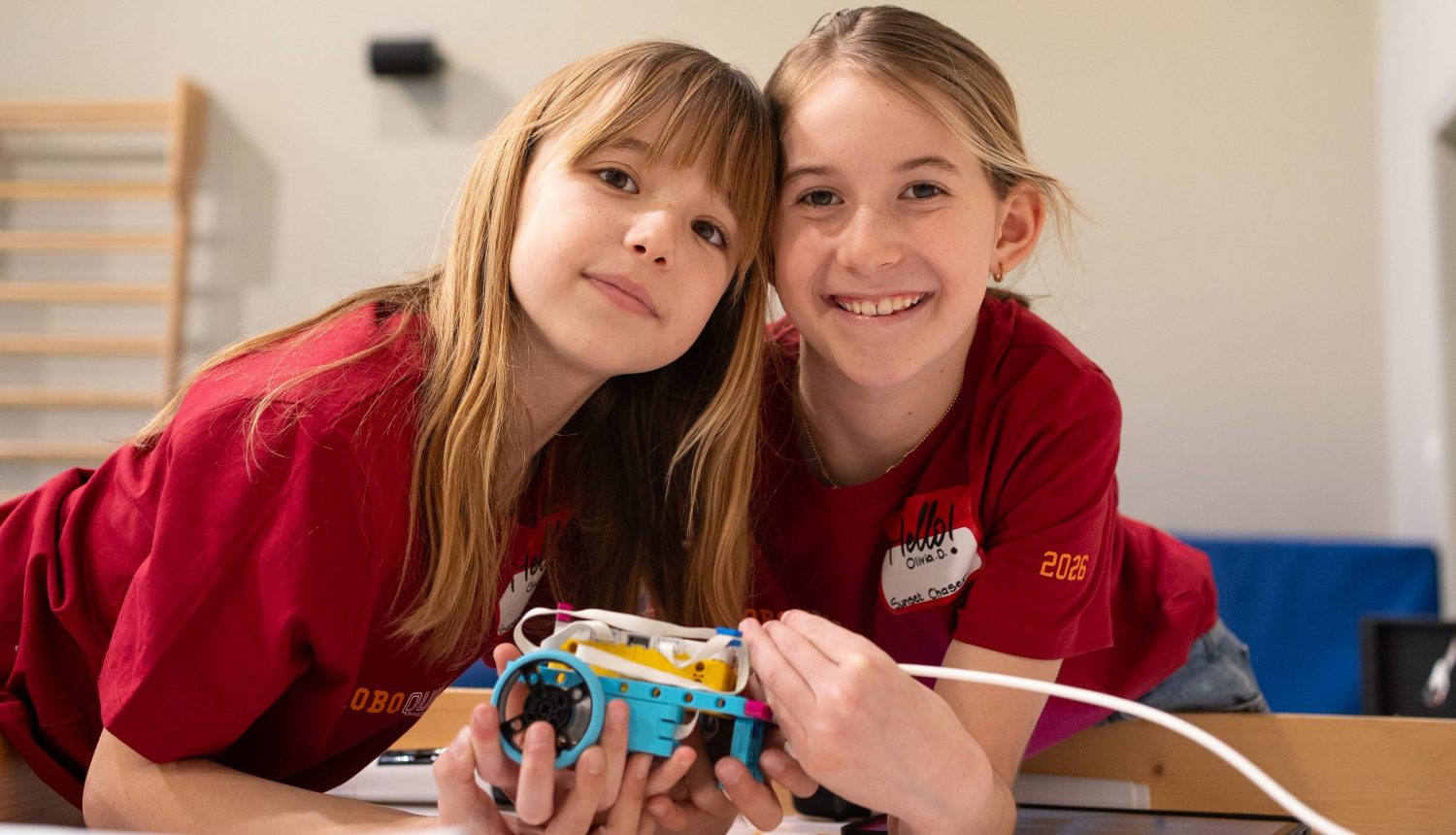
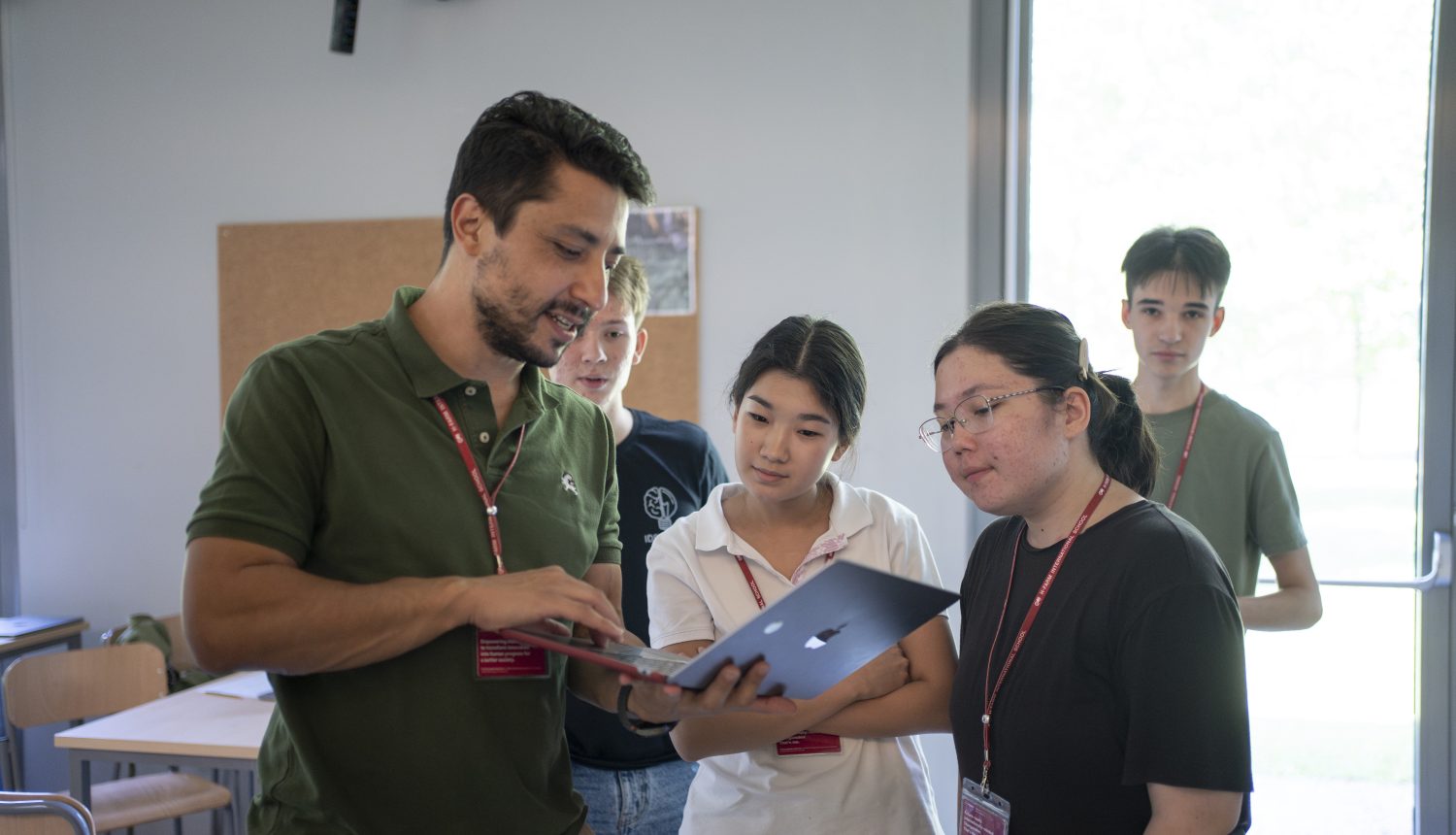
To tackle these missions, each team designed and built its own robot using LEGO Spike kits, selecting components, sensors, and strategies. Color sensors became scientific instruments: detecting water, identifying active craters, and guiding the robot across obstacles and unfamiliar terrain.
But above all, code was their language.
Line after line, attempt after attempt, the robots learned to move across rocks, dunes, and craters. And alongside them, so did the students.
Not to compete, but to solve
At RoboQuest, the difference is immediately clear: it’s not “us versus them,” but “us versus the problem.”
Observe. Analyze. Modify. Try again.
That’s where everything happens. In that continuous cycle of attempts, students experienced what it truly means to learn: not to look for quick answers, but to build them over time.
As Zara explains:
“I collected minerals to analyze the planet’s composition and understand whether conditions favorable to life ever existed.”
And in Olby’s words:
“Through code, we remotely controlled my robot to explore the planet. Step by step, together with my team, I completed the mission.”


Months of preparation
What we saw on Saturday did not come together in a single day.
For months, students worked, experimented, and above all, chose to dedicate their time to this challenge. In the RoboCorner, a free space during breaks where they gathered to test ideas, refine code, and rethink strategies.
Between sensors that didn’t work and robots that veered off course, real skills were built: systems thinking, computational logic, diagnostic ability. But also something harder to teach: autonomy, collaboration, and perseverance.
Fewer and fewer questions for teachers. More and more peer-to-peer exchange.
The teams: identity, energy, imagination
Each team brought something unique to the mission.
The Galaxy Bot and Infinite Horizon explored with ambition, while the Horizon Hunters sought precision and control. The Sunset Chaser never stopped in the face of errors, just like the R.O.P. Geniuses, always ready to recalibrate their code.
The Space Bots, among them one of the winning teams, demonstrated great consistency, while the Moon Conquerors aimed high, quite literally. The Potato Planets and the Sprinkles brought creativity and intuition, while D.M.C (Diamond Mission Creation) and Superstar Academy approached every challenge with strategy and determination.
And then there were the Street Bots.
The winners
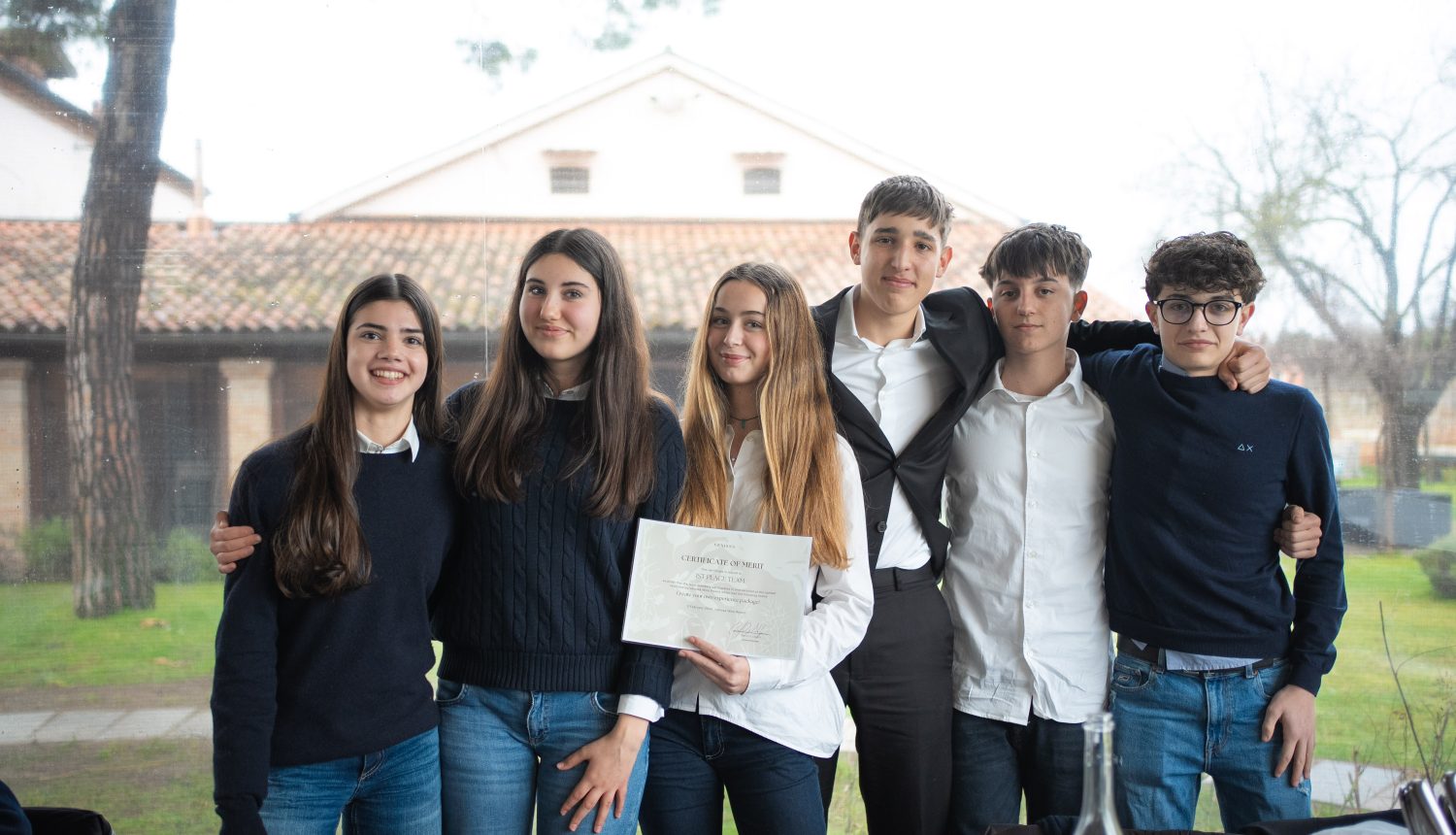
Taking first place were the Street Bots, with Rintharo and Sebastien (both MYP2 students), followed in second place by the Space Bots, made up of Emerson (MYP3), Otto (MYP1), and Livia (MYP2).
Both teams stood out in the Mineral Challenge, demonstrating not only technical precision but also a strong ability to analyze and adapt.
Because in the end, it’s not those who make fewer mistakes who win. It’s those who learn faster from them.
After last year’s first edition, RoboQuest returned with a richer structure, a more immersive narrative, and even more authentic engagement.
An experience that accompanies students for months and culminates in a day when everything comes together.
Much more than robotics
RoboQuest doesn’t just teach how to build robots.
It teaches how to stay within complexity, how to truly collaborate, and not to be afraid of not knowing the answer right away.
In a world driven by instant gratification, this may be the most important skill of all.
Because the future will not be made of simple problems, nor will it offer immediate solutions.
And watching these young explorers in action, one thing is certain: they are not just learning to program robots. They are learning how to think. 🚀
A heartfelt thank you to the PYP Homeroom Teachers Mr. Owen and Miss Flika, creators and coordinators of RoboQuest, to the Sparx team, fundamental to bringing this initiative to life, to all the students who participated with enthusiasm and dedication, and to the parents and teachers who supported and guided them throughout this extraordinary journey.





 Back
Back

