
Who knows, maybe the next winner of MasterChef is already here.
His name is Luca, he’s 16 years old, studies in MYP5 at H-FARM International School Vicenza, and for his Personal Project he created a cookbook that transforms simple ingredients into fine dining dishes, showing that the aesthetics, care, and overall food experience don’t depend on budget, but on the perspective with which they are created.
Luca has been cooking for most of his life, he was only 8 years old when he started, and since then he has never stopped practicing and experimenting. His passion began early and has grown over time into a thoughtful and intentional pursuit. Not just the pleasure of preparing a dish, but the desire to understand how to make it better, more refined, more complete.
It is precisely from this vision that his project was born: “Cookbook for Students.”
A book built on a simple yet powerful idea: to create “a one-of-a-kind cookbook that demonstrates how effortlessly you can craft extraordinarily delicious dishes every day using simple ingredients and minimal time.”
Pumpkin, potatoes, eggs, tomatoes, basil, cauliflower: all everyday ingredients, accessible, often already in the kitchen, that in his recipes are transformed into dishes costing less than €1 per portion.
And yet, although his dishes are designed to be easily replicated by other students, they “should look like those of five-star cuisine” or at least, as he writes himself, “I aim to embrace this challenge as best as I can!”
As you flip through the book, you’ll quickly realize just how successful he has been in achieving his goal.
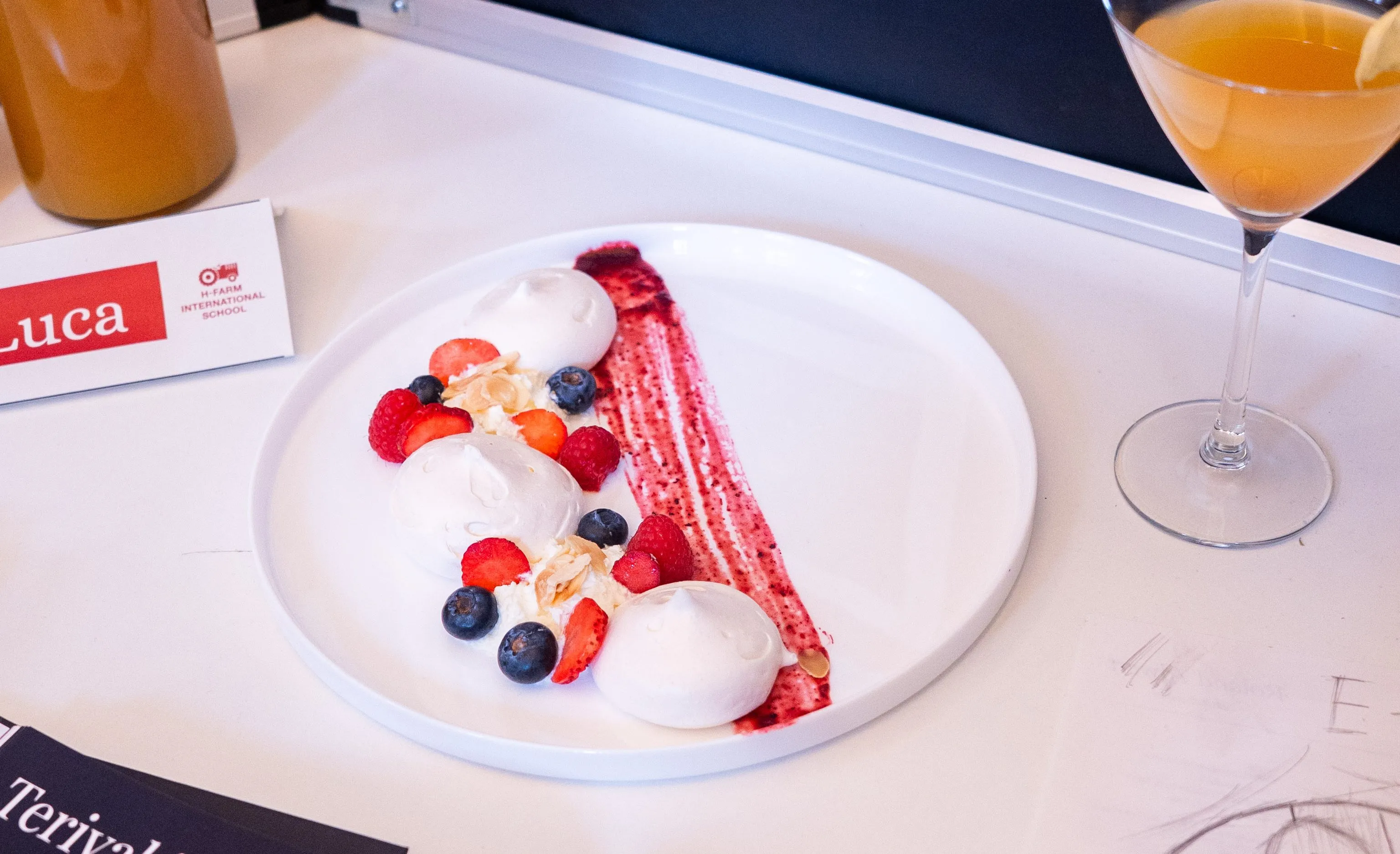
Every dish, from its name to its composition, from flavor to texture, from colors to the choice of plating, is carefully thought out down to the smallest detail. At a glance, they have little to envy from the most refined restaurants.
Dishes such as Eton Mess, teriyaki salmon, or green Thai curry are reinterpreted with a level of precision that goes beyond simple execution. Every element has a purpose, every detail is intentional. Above all, each dish keeps a promise: to be replicable at a low cost, without sacrificing visual impact.


Luca, MYP Student
“The presentation of a dish is the key to success,”
he writes in the introduction of his book.
That is the moment when a dish stops being mere nourishment and becomes an experience.
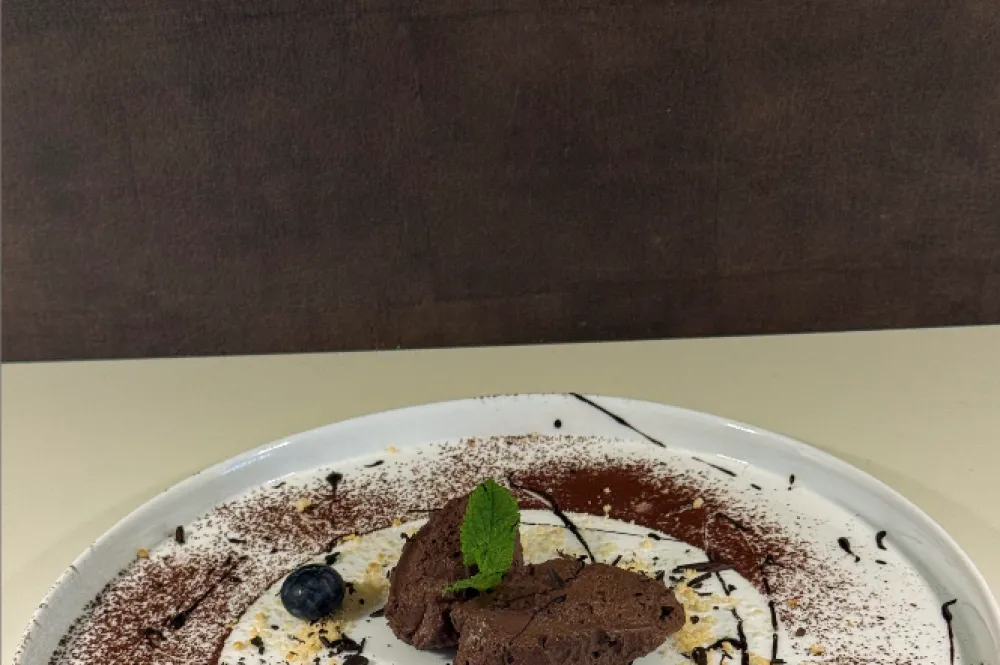
A perfect example of this approach is his Mousse au Chocolat.
A dessert that, in his version, requires only a few ingredients and a low cost (about €4.50 for 4 servings, just over €1 per portion) yet delivers an elegant and refined result.
Here is the recipe:
2 fresh eggs, 100 g of dark chocolate, 250 ml of cream, 2 teaspoons of sugar, and 2 teaspoons of water.
- Separate the egg yolks from the egg whites.
- Whisk the egg yolks together with the sugar and water until creamy.
- Beat the egg whites separately until stiff peaks form.
- Whip the cream in another bowl until stiff.
- Melt the chocolate in a bain-marie (double boiler).
- Add a small amount of the melted chocolate (not too hot) to the egg-yolk mixture.
- Use a spatula to gently fold it in, bringing the mixture from the bottom up to the top.
- Add some whipped cream and a portion of the egg whites, folding gently.
- Continue alternating and folding softly until everything is combined.
- Transfer the mousse into a glass bowl and let it cool in the fridge for at least 3 hours or overnight.

However, to achieve this result, cooking alone was not enough.
Creating the book required much more: a range of different skills that Luca had to develop along the way. From photography, learning how to manage sets and lighting, to plating, experimenting with different compositions to meet his own standards of success. All the way to graphic design and layout, essential to turning the project into a real book.
A complete process, starting from an idea and culminating in a finished product.
His project was so well received that his teachers decided to organize a dinner entirely based on his recipes!
But beyond the recognition, what truly remains is the core idea behind the project: that “with a bit of creativity and attention, even the simplest ingredient can be transformed into something unexpected.”
His hope, as he writes on the back cover, “is that this book inspires other students and cooking enthusiasts to try out new ideas in the kitchen.”
Because that is exactly where, in his view, “the magic happens: in the kitchen, where the possibilities are endless.”


 Back
Back

