What Schools Are Really For in the Age of AI
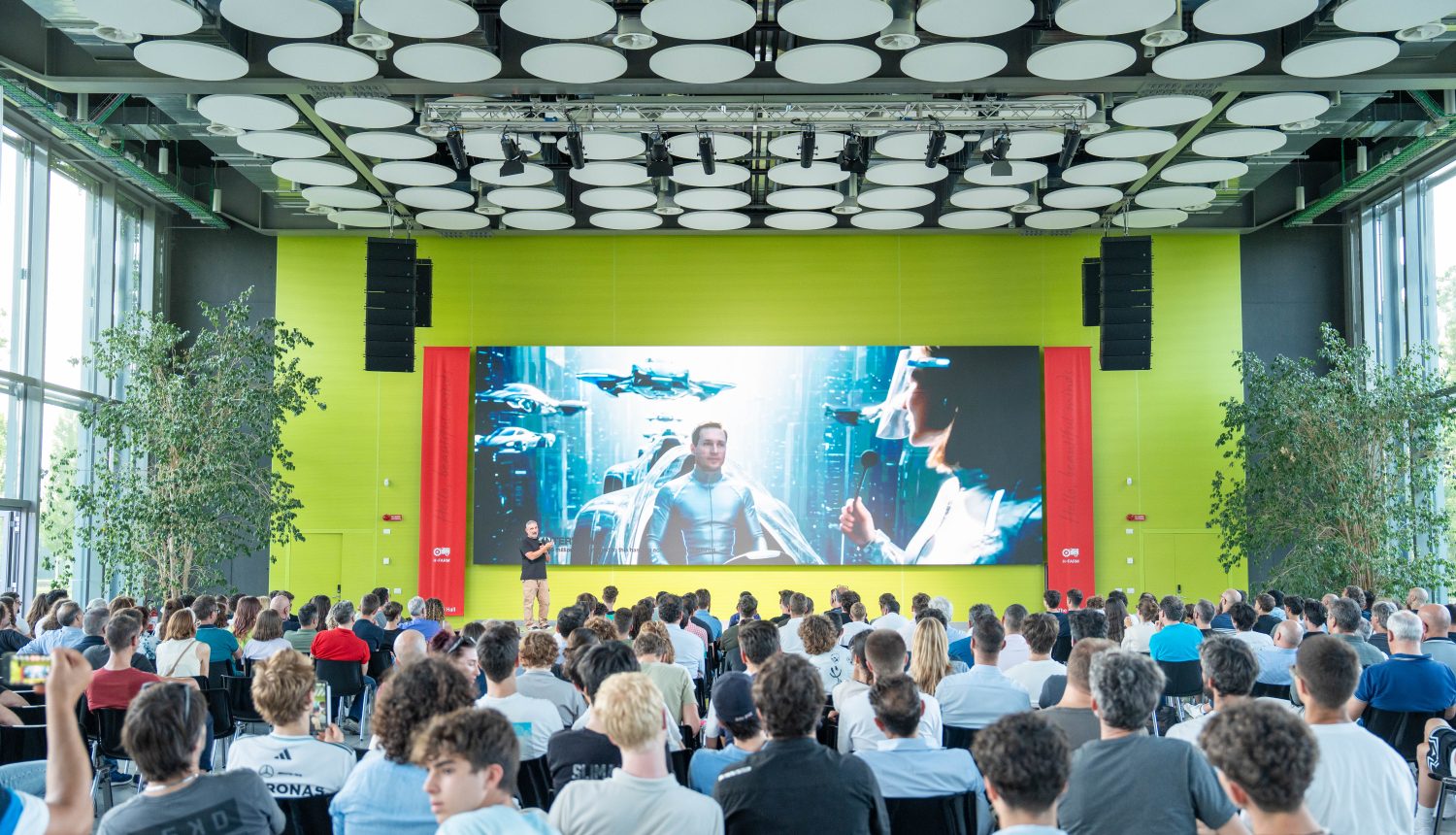

When my colleague from the communications department asked me to share some reflections on Nord Anglia’s campaign, “Skills AI can’t match”, I felt both responsibility and hesitation. I write from a double perspective: as the Principal of H-FARM International School, a K-12 institution deliberately placed at the meeting point of education, technology, entrepreneurship and human formation, and as a father trying to understand what kind of world our children are entering. What follows is therefore neither a technical position paper nor a simple institutional statement. It is a reflection shaped by professional duty and personal concern, in the hope that it may be of some use to other school leaders, educators and parents who are asking similar questions.
Part of the difficulty is that we are trying to speak clearly while navigating a sea whose conditions are changing as we sail. The old maps do not quite describe the waters before us. The stars are partly hidden. Even the instruments we are using seem to change as we hold them.
We are also living through a wider crisis: civic, psychological and technological. This crisis does not sit only in institutions, systems or public discourse; it reaches the individual person, the way we attend, remember, speak, relate and understand ourselves. Yet the word crisis, in its older sense κρίσις, does not mean collapse alone. It carries the idea of judgement, decision, turning point. That is why our response to AI matters so much. The danger is not simply that machines may become more powerful. It is that human beings may become thinner: less attentive, less inwardly alive, less able to descend into themselves and meet the world from a place of depth.
AI is already changing how we work, communicate, study, create and imagine the future. It is no longer a marginal tool or a passing enhancement to the existing architecture of society. It is becoming part of that architecture. It can write, calculate, summarise, translate, generate images, provide feedback, adapt explanations and simulate certain aspects of human reasoning with remarkable speed. For schools, the question is no longer whether AI should enter learning. It is already here. The real question is how we help young people live with it without being diminished by it.
Students need to learn how to work with technology without being used by it. They need to direct intelligent systems, question them, test them, recognise their limitations and use them with creativity and care. At the same time, schools have to protect those human capacities that no machine can carry on our behalf: attention, judgement, memory, dialogue, imagination, courage, and the ability to live meaningfully with others.
Aristotle wrote in the Politics that the human being is, by nature, a political animal. The phrase is often reduced to a statement about society, yet its meaning is richer. To be human is to become oneself in relation: through speech, shared life, disagreement, responsibility, friendship, law, justice and the search for the good. We are not isolated processors of information. We are embodied, historical and relational beings, and any serious discussion about AI in education has to begin there.
For much of human history, knowledge was carried in memory, voice and body. Ancient bards could hold thousands of lines in mind through rhythm, pattern, image and repetition. The Homeric poems were not merely stored. They were inhabited. Memory was a living discipline, a way of carrying the world within oneself.
We now stand almost at the opposite end. A student can receive an answer in seconds. A paragraph can be generated before a thought has had time to ripen. A translation can appear before the learner has wrestled with the shape of another language. There is much here to welcome. AI can widen access to support. It can give a child a patient tutor, immediate feedback, an alternative explanation, or a first way into a difficult problem. Used well, it can help students who might otherwise remain silent.
The danger is quieter, and perhaps for that reason more serious. If every difficulty is removed too quickly, if every question is answered before it is properly felt, if every text is summarised before it is encountered, students may begin to confuse access with understanding. To comprehend something is to take it in, to hold it together, to make it part of oneself. There is no shortcut for that.
Schools need to think with care, and with some courage, about the architecture of learning. The classroom of the future cannot simply inherit a model of passive reception, rows, compliance and instruction delivered from above. It should move closer to the agora: a place of dialogue, disciplined inquiry, argument, listening, encounter and shared meaning. Vygotsky understood that learning is social before it is internal. We think with others before we think fully alone. AI does not remove this truth; it makes it more urgent.
There will be moments when AI should be used openly and powerfully. Students should learn how to prompt it, challenge it, compare outputs, detect weakness, identify bias and refine their own questions. There must also be protected moments when AI is absent: when students read slowly, write from within themselves, solve problems without instant rescue, speak to one another, remember, draw, build, observe, rehearse, fail and begin again.
A ban would be too simple, and ultimately dishonest. Indiscriminate use would be equally careless. The real work lies in judgement: deciding when AI strengthens learning and when it quietly replaces the effort through which learning takes place.
This also asks us to move beyond a narrow idea of intelligence. Intelligence cannot be reduced to speed, recall, pattern recognition or even problem-solving. These matter, but they are partial. A richer understanding of intelligence includes the ability to reason carefully, ask better questions, understand concepts, test evidence and build knowledge over time. It also includes the steadiness to remain with uncertainty, the capacity to listen and disagree with dignity, and the practical wisdom to bring thought and judgement into action. Intelligence becomes truly human when it is lived through bodies, stories, relationships, communities, values and consequences.
AI does not possess these. It has no childhood, no moral memory, no responsibility for what it says, no face before another face, no experience of love, grief, beauty, shame, loyalty or hope. It can produce language, but it does not dwell in meaning as human beings do.
There is an idea in George Steiner’s work that has always stayed with me: language is not simply an instrument of communication, but one of the places where human presence becomes visible. This matters deeply for education. A word is never only a word; it carries memory, attention, relationship, inheritance and responsibility. The same is true of learning. We do not educate children merely to make them efficient, adaptable or employable, although these things matter. We educate them so that they may attend more fully to the world, remain open to complexity, develop the courage to stay with difficulty and become capable of judgement. The work of a school is therefore not the delivery of skills as discrete units, but the formation of persons who can think, feel, speak and act with increasing depth.
Perhaps this is the strange gift of AI: it forces us to ask again what schools are really for. When answers are instantly available, students need to learn how to form better questions. When text can be generated fluently, they need help in developing voice. When knowledge can be simulated, understanding has to be deepened. When production accelerates, attention has to be defended.
Joseph Campbell’s account of the hero’s journey offers a useful image for learning. The learner leaves the familiar world, encounters difficulty, receives guidance, faces failure, changes, and returns transformed. This is not a childish myth. It is a profound pattern of human development. In this story, the teacher is not a controller of every movement, but an architect of meaningful challenge: a mentor who knows when to intervene and when to let the student struggle. Peers become companions in uncertainty. Failure becomes evidence rather than defeat. The classroom becomes a place where the young person learns that confusion is often the threshold of understanding.
Parents and educators face the same temptation: to protect children from difficulty so carefully that we deprive them of the experience through which confidence becomes real. We should not remove every obstacle, translate every discomfort into an adult solution, or make learning frictionless. Productive struggle is not cruelty. A child who has never been allowed to be uncertain will not become independent simply because the world demands it later.
The questions we ask matter. Instead of rushing to rescue, we might ask what was tried, what made the task difficult, what changed in the child’s thinking, what evidence they have, what they would do differently next time, where they needed help and where they managed by themselves. Such questions develop metacognition: the capacity to think about one’s own thinking. This may become one of the most important skills of the AI age. A student who cannot judge the quality of an answer is easily impressed by fluency. A student who has learned to question, compare, reflect and revise is much harder to mislead.
The Odyssey gives us an image for our time. The song of the Sirens has never been sweeter. AI offers speed, ease, fluency and the seductive promise that the labour of thought can be outsourced. Like Odysseus, we need intelligence, discipline and companions. We need to hear enough to understand the danger, while remaining bound to a deeper purpose.
Our task is not to shrink away from the world. It is to enter it more fully.
Young people need direct contact with reality: with books, nature, conversation, materials, silence, music, mathematics, languages, laboratories, workshops, communities, ethical questions, and the stubborn resistance of things as they are. A map is useful, but it must never replace the journey. AI can help us navigate. It must not become the sea, the stars, and the destination.
The skills AI cannot kill are the skills that belong to human becoming: judgement, attention, courage, empathy, imagination, dialogue, perseverance, and the search for truth, goodness and beauty.
These are not soft skills. They are the hard centre of education.



 Back
Back

