Two Days Inside Science: The second edition of Teens in STEAM
There are days that take the shape of an experiment. You begin with a hypothesis, that science can truly belong to everyone, and move forward through attempts, observations, mistakes, and discoveries. The second edition of Teens in STEAM, hosted at our Venice Campus, was exactly that: two days in which students did not simply hear about science, but lived it. First through the voices of those who have dedicated their lives to it. Then with their own hands, inside thirteen workshops, standing in front of microscopes, turbines, and test tubes.
Six Stories, None of Them Linear
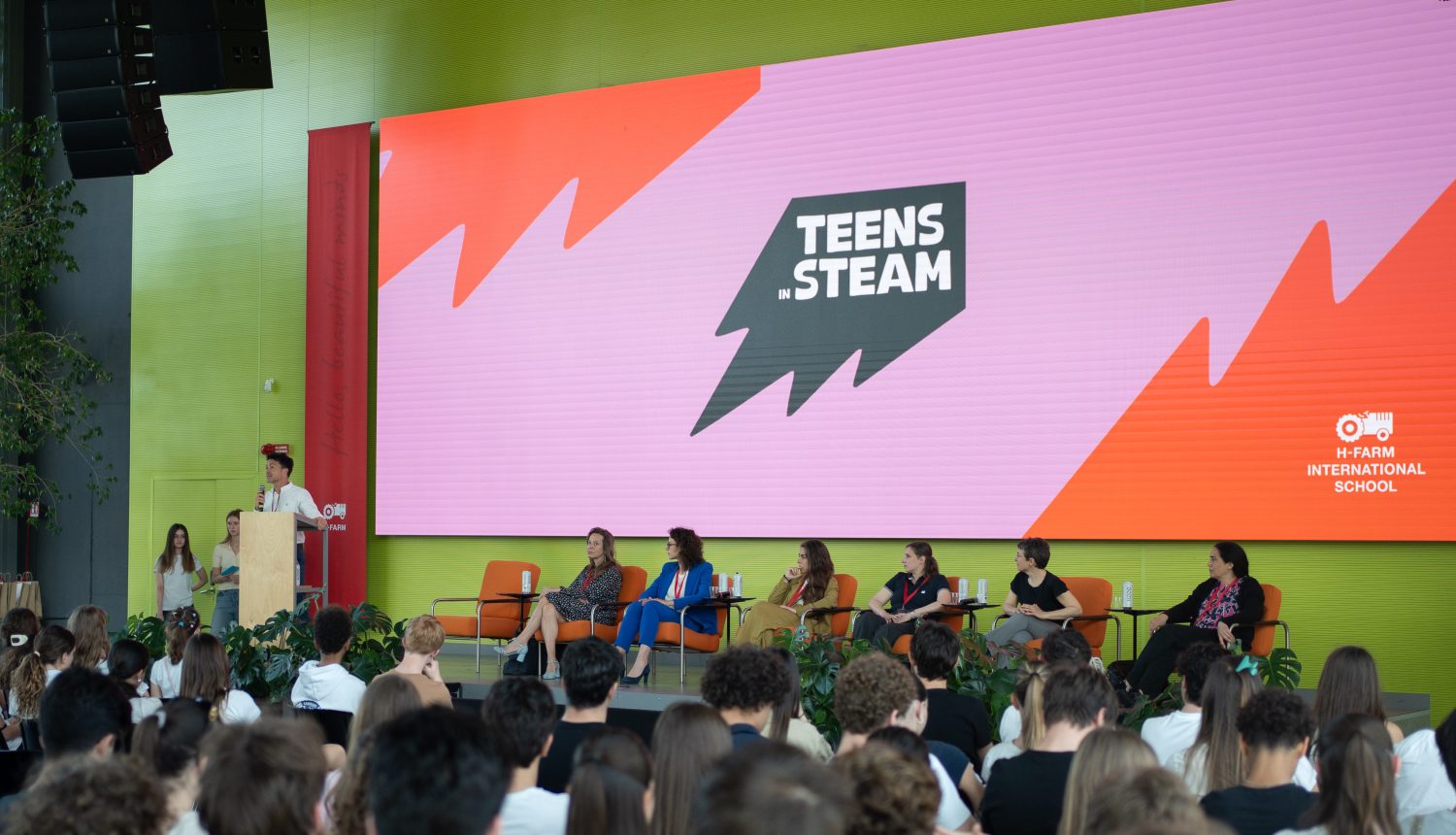
The first day opened with an Inspirational Talk for MYP and DP students, also from our Vicenza Campus . Six women, astronomers, mathematicians, biotechnologists, engineers, and researchers, took the stage, ready to share their stories. Guiding the conversation alongside them were three of our students: Daria, Erin, and Agata, who acted as moderators.
Opening the talk, our Head of School, Emiliano Cori, set the tone for the hours that followed with a reflection: “Science begins when we stop taking the world for granted, when we look again, when we do not accept the first answer.” In an age where artificial intelligence can produce fluent answers in seconds, he reminded students that slowing down matters. Because “the appearance of thought is not the same as thinking. Fluency is not the same as truth.” And because STEAM and the humanities, far from being separate worlds, need one another: science needs imagination, technology needs ethics, mathematics needs beauty, and innovation needs responsibility.
The six speakers who took turns on stage shared different journeys shaped by different fields, choices, and lives, yet united by one common truth: none of them reached where they are today by following a straight line.
Marianna Benetti, mechanical engineer and co-founder and CEO of Veil Energy, opened the conversation with an anecdote that made the whole audience smile. She recalled the first construction site she entered as a young engineer, where a worker told her, “you have very clean working shoes.” She answered, “I have to learn how to get them dirty.” From that moment, she said, she understood she would have to prove that she belonged there. A small, almost comic scene that nevertheless captured the prejudices and assumptions women in STEM still learn to confront today.
Laura Carnieletto, environmental researcher at Ca’ Foscari University, also began with a very concrete episode. During a period spent at the Lawrence Berkeley National Laboratory in California, she was working on energy simulations for the city of Venice. Her American colleagues kept asking why she did not simply apply standard efficiency technologies, exterior insulation, heat pumps, modern materials. She tried to explain that Venice is something entirely different: a historic city built on water, where buildings stand directly in the canals. But none of them had ever truly seen it. So she opened Google Maps in Street View mode: “the little man jumped onto a boat,” and suddenly the canals appeared before their eyes. From that moment came one of her strongest convictions: “sustainability is not just a matter of technology and innovation. It’s about climate, culture, history.” Sustainability cannot simply be applied to a place; it must be built from the identity of that place itself.
When the conversation turned to failure, the stories became more personal. Valeria Agostino, biotechnologist at the Italian Institute of Technology in Turin, spoke about her all-consuming relationship with research: years spent in the lab even on weekends because, as she put it, “microbes are like little bad guys, you have to take care of this every day, every night, every weekend.” Until eventually her body forced her to stop. Today she describes that period as her greatest personal failure, a moment when she had to learn that “if you are too much into, then you cannot really see the path, because you are too much inside.” Paradoxically, that awareness made her a better researcher.
On the same theme, Chiara Gionco, researcher at INRIM, shared another kind of vulnerability. During a university physics exam, overwhelmed by pressure, she burst into tears. Her professor looked at her and remarked that a male colleague would not have reacted that way. From that episode emerged one of the deepest reflections of her journey: “equality is not being the same. Each of us is unique, and equality is to have the same opportunities, even if you are different.”
When asked whether it is possible to build a STEM career without sacrificing a rich personal life, Veronica Strazzullo, astronomer at INAF Trieste, answered with clarity. Together with her husband, also an astronomer, she has lived across Germany, France, and the United States while raising a family. Her response was direct: “your life is one, and each of us has only one life. So the less regrets you will have, the better it will be.” She also offered a message to the girls in the audience: do not let being a girl define who you are, who you will become, or what you can or cannot do.
In dialogue with this reflection, Sikimeti Ma’u, mathematician and university lecturer in Venice and Verona, brought one of the most honest stories about comparison and competition. As a teenager, she performed very poorly in a final mathematics exam, far worse than her older brother, who had taken it the year before. “The failures where you fail by comparison, those are the ones that sort of rankle for the longest,” she explained. At first, she chose to study languages at university, convinced she simply was not suited for mathematics. Yet a quiet curiosity kept pulling her back, and eventually she began attending a mathematics course alongside her regular studies, almost privately, simply to understand whether that judgment truly reflected who she was. That course ended up changing her life. Her story showed, without rhetoric, how competition, especially the internalized kind built on silent comparisons, can become an enormous burden, and how authentic curiosity, even when it arrives through unexpected paths, is often the only reliable compass.
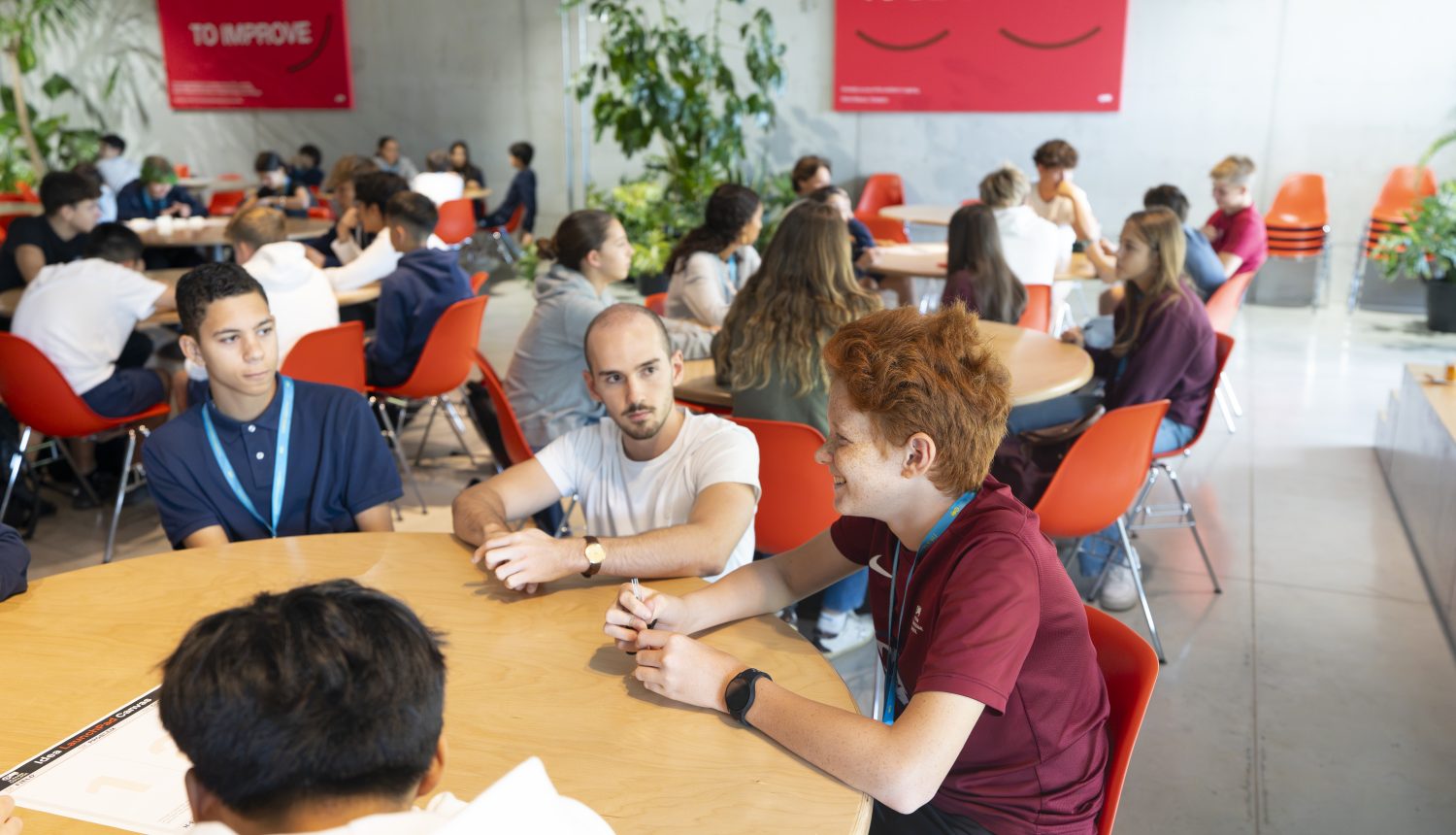
But the conversation did not end there. At the close of the talk, twenty-eight students from the H-elevate program had the opportunity to share lunch with the guests. It was designed as a moment to move beyond the stage format and transform listening into dialogue: small tables, direct conversations, and the chance to ask questions students might never raise during a public event. They spoke about university choices, building a research career, navigating moments of uncertainty, but also about everyday life, family balance, and what it truly means to work in science today. For many students, this became the moment when the stories they had heard in the morning stopped feeling distant and became real: real people, sitting just a meter away, sharing a meal and a conversation.


Hands-On Learning
The following day brought a complete change of scene. Reflection gave way to action.
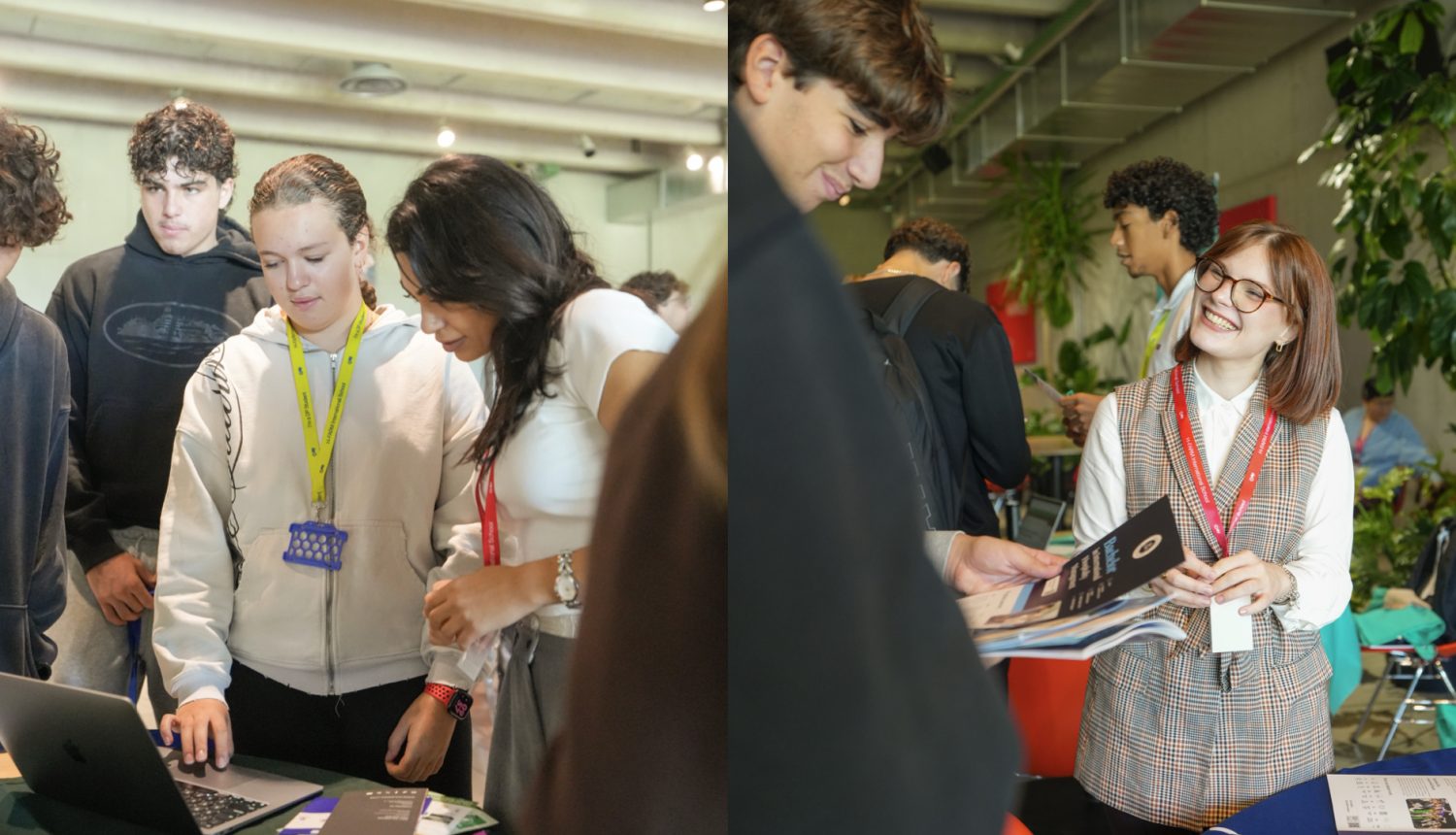
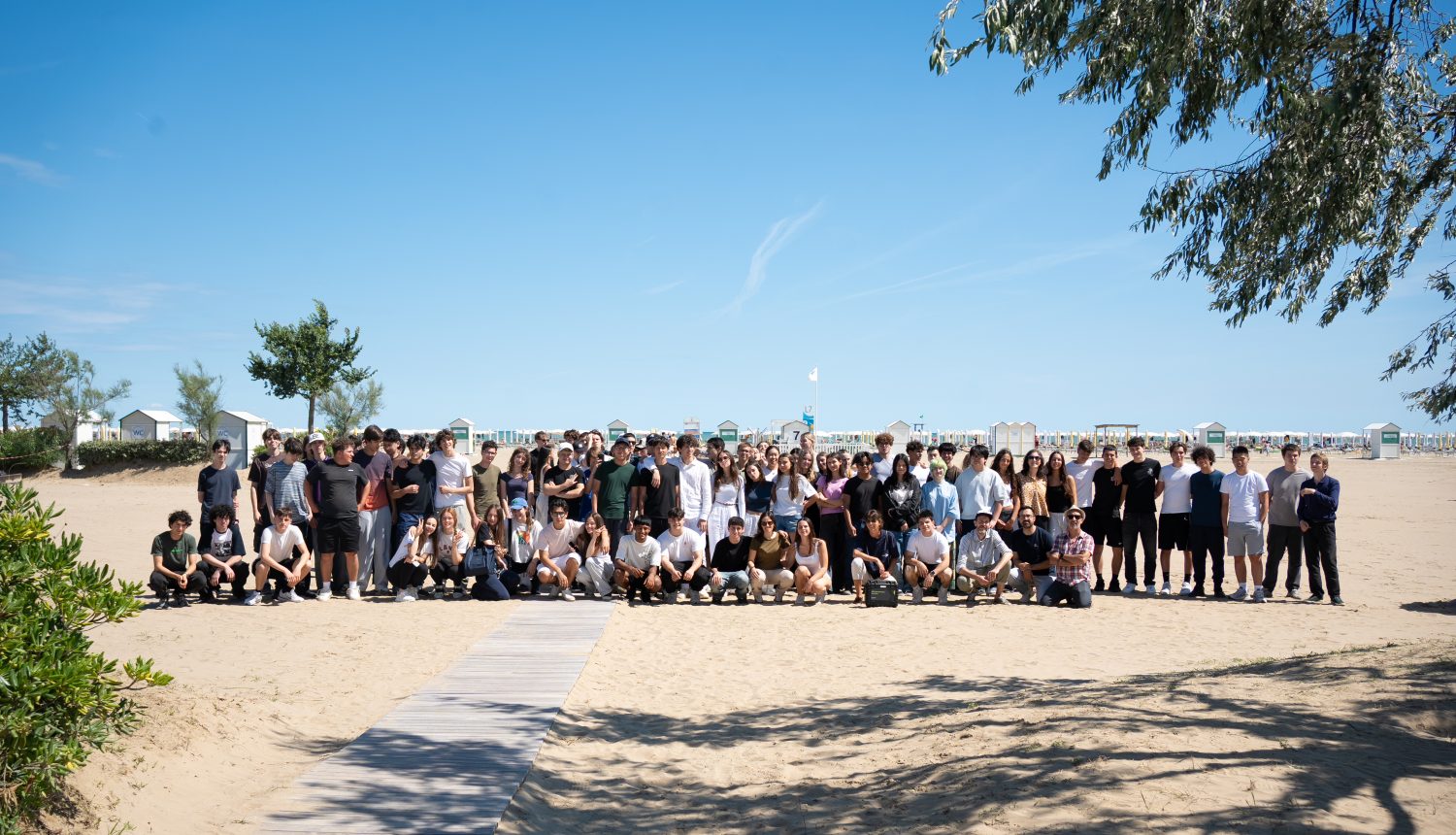
Two hundred students between the ages of 10 and 14, arriving from local public schools and from our campuses in Venice and Vicenza, filled the campus and split into thirteen workshops. The philosophy was simple: learning by doing. Because some things can only truly be understood by making them yourself.
Across classrooms and courtyards, an extraordinary variety of activities unfolded within just a few hours. In the polymers lab, participants mixed solutions and cross-linking agents to create a gelatinous slime with their own hands, discovering along the way how the bonds that hold matter together actually work. Nearby, others were building small wind turbines from scratch, understanding blade by blade how wind can be transformed into energy. Outside on the lawns, paper parachutes dropped from different heights to measure the effect of air resistance on falling speed, while inside the robotics rooms students programmed LEGO robots to move, avoid obstacles, and respond to commands: small automated systems introducing the fundamentals of coding in a concrete and engaging way.
In the biology lab, state-of-the-art digital microscopes revealed invisible worlds, cellular structures, fibers, microscopic organisms, thanks to the support of the technicians from Exacta Labcenter. Nearby, in the soil ecology workshop led by SESA Este, students sifted through soil samples collected from the school grounds, identifying insects, annelids, and plant roots using botanical recognition apps. In Ca’ Foscari’s chemistry lab, reactions burst into color: oscillating systems, luminescence, and energy transfers demonstrated just how spectacular chemistry can be. Elsewhere, red cabbage transformed into a natural pH indicator, changing color when exposed to everyday substances and instantly revealing what is acidic, basic, or neutral.
And there was more: virtual reality headsets transported participants into immersive educational environments; timed mathematics challenges tested both speed and precision; inks and plaster casts were created together with researchers from the Italian Institute of Technology to explore material properties and reproduction processes; an art and creativity workshop brought science and imagination together; and outside, on a lawn transformed into an emergency operations field, the Civil Protection team from Eraclea staged rescue simulations with real pumps, sandbags prepared for hydrogeological emergencies, and rope-throwing exercises for water rescue scenarios.
We strongly believed in this project and chose to make it happen, investing in an experience designed to inspire young students and bring them closer to the world of STEAM. Alongside us, a number of partners joined the initiative and contributed to shaping the day: Exacta Labcenter, SESA Este, IIT – Italian Institute of Technology, SparX, Ca’ Foscari University, ML Systems, Protezione Civile di Eraclea, and Avantor. A special thank you also goes to the Municipality of Roncade and the Municipality of Quarto d’Altino for their support and closeness to the initiative.
Finally, special thanks go to those who held these two days together from beginning to end: Professor Vincenzo Pitarresi, together with laboratory technicians Francesca Sasso and Carlo Burchielli. They were the ones who imagined, designed, and coordinated Teens in STEM from start to finish.
Opening the day, Professor Pitarresi reminded everyone of one simple but fundamental truth: “the greatest discoveries in science have always been born from collaboration, never from the mind of a single person.” And that is exactly what we witnessed over these two days: a community of researchers, teachers, and students sharing questions, mistakes, and discoveries together. A community that returned home carrying a few new ideas, a few new friendships, and perhaps even a new dream. ✨





 Back
Back

