Behind the IB: What an Evaluation Visit Really Means
Understanding the value of IB through the voice of an expert
This past week, our school welcomed the IB Evaluation Team, a key milestone in the life of every IB World School.
But what does an IB Evaluation Visit really mean?
What are evaluators looking for?
And why does it matter for students and families?
To explore what happens behind the scenes, we spoke with Ms. Aslı Çelik, our PYP Coordinator at H-FARM International School Vicenza and a long-standing member of the IB Educator Network (IBEN).
With over 25 years of experience in education and more than 15 years working directly with the IB, Ms Çelik brings a truly global perspective on what it means to be an IB school.

The Interview
This past week we hosted the IB Evaluation Visit. From your perspective, what is the purpose of this visit?
Every five years, IB schools go through an Evaluation Visit to reflect on how closely their practices align with the IB framework.
It’s not something that starts with the visit itself. In the months leading up to it, the whole school community is involved in a deep reflection process. Students, teachers and parents all contribute to a self-study that looks at key areas such as teaching and learning, assessment, collaboration and school culture.
By the time the IB team arrives, they already have a clear picture of the school through shared documentation. The visit is really about bringing that picture to life.
Over two and a half days, evaluators spend time in classrooms, talk with students, teachers and families, and observe how the school functions on a daily basis.
The goal is not just to check compliance, but to understand the school in depth, celebrate its strengths and support its next steps.
During an IB Evaluation Visit, what are evaluators really looking for in a school?
At the heart of it is how learning happens and its impact on students.
The IB places strong value on inquiry, conceptual understanding and the development of skills, alongside academic rigour. The focus is on whether what is designed in the curriculum is actually experienced by students in meaningful ways.
In schools like ours, which implement all three programmes, there is also attention on how well practices are connected across the school. This means looking at how PYP, MYP and DP align in terms of teaching approaches, assessment and overall coherence.’allineamento tra PYP, MYP e DP in termini di approcci didattici, valutazione e coerenza complessiva.
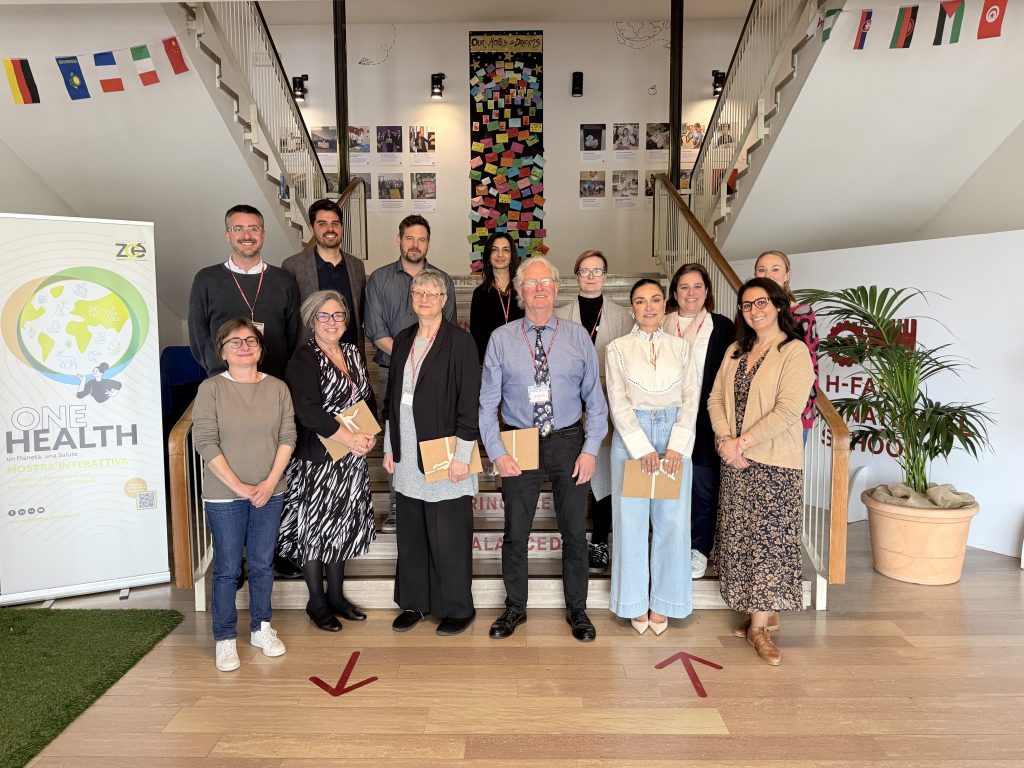
PYP: Denise Michel, Sally Yassin,
MYP: Eif Phillips, Ivana Popa
DP: Elke Heinicke, Nazanin Nikanjam
What does an IB Evaluation Visit mean for our students, even if they don’t directly notice it?
It is a moment of awareness for the school.
We take a step back and ask ourselves:
Are we truly living the IB philosophy?
What are we doing well?
Where and how can we grow?
Even if students do not directly experience the process, they benefit from it every day. It helps ensure that their learning experience remains consistent, meaningful and continuously improving.
Many families might think of this as an inspection. Is it really like that?
It’s understandable that it might feel that way from the outside.
The IB has strong standards and a global reputation, so there is a clear structure. However, for schools like ours, where the IB philosophy is deeply embedded, the visit feels very different.
It becomes a moment of dialogue rather than judgement. A chance to reflect, celebrate what is working well and receive meaningful feedback.
We have just received the initial feedback, and it was very positive. What was especially meaningful is that the areas for development identified by the team are very much in line with our own reflections and strategic direction.
You are also part of the IB Educator Network. What does this role involve?
I have been part of the IB Educator Network for about 15 years, taking on different roles including workshop leader, evaluation team member and leader, and consultant.
My journey with the IB actually began as a student, which has given me a unique perspective.
Over the years, I have visited more than 100 schools worldwide. Each one is different, and there is always something to learn.
What stands out about our school is the strength of the community and the genuine commitment of our teachers. There is a clear sense that students are always at the centre.
What is the added value of having IBEN professionals within the leadership team?
It helps maintain openness and a genuine lifelong learning mindset.
Working with schools internationally broadens perspectives and exposes you to different approaches and ideas. This naturally fosters reflection and continuous improvement.
In a school like ours, this mindset is shared across the leadership team. Engagement with the IBEN network and global practices informs everyday decision-making. In this context, having multiple IBEN professionals within the Programme Leadership Team, including Ms. Stefania Pasquali, Head of PYP and IB Workshop Leader and Evaluation Leader, strengthens a shared vision that is both aligned and forward-looking.
If you had to explain to a parent why this visit matters, what would you say?
I would say it’s not just about those three days.
It is part of an ongoing process that keeps the school reflective, transparent and focused on improvement.
It allows us to look at ourselves with fresh eyes, celebrate what we do well and refine where we want to go next.
And ultimately, all of this is for the students. It ensures they are part of a school that is constantly evolving and committed to offering a high-quality, meaningful education.o è per gli studenti: garantisce loro di essere parte di una scuola in costante evoluzione, impegnata a offrire un’educazione di qualità e significativa.




 Back
Back

