To infinity and beyond: space explained to our students by a very special dad
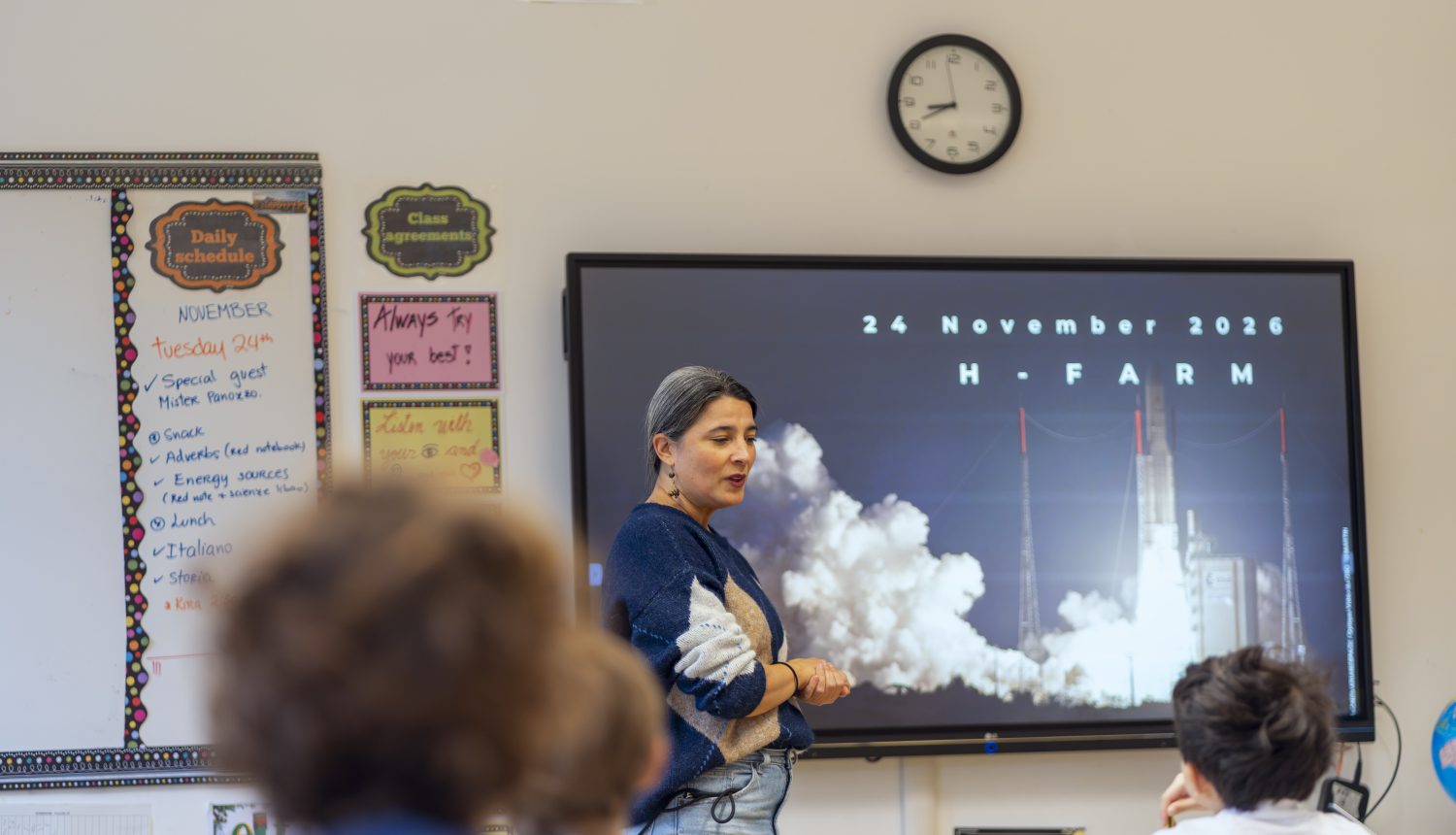
“How do you draw a trajectory?” “Why do we use a rocket and not a plane?”
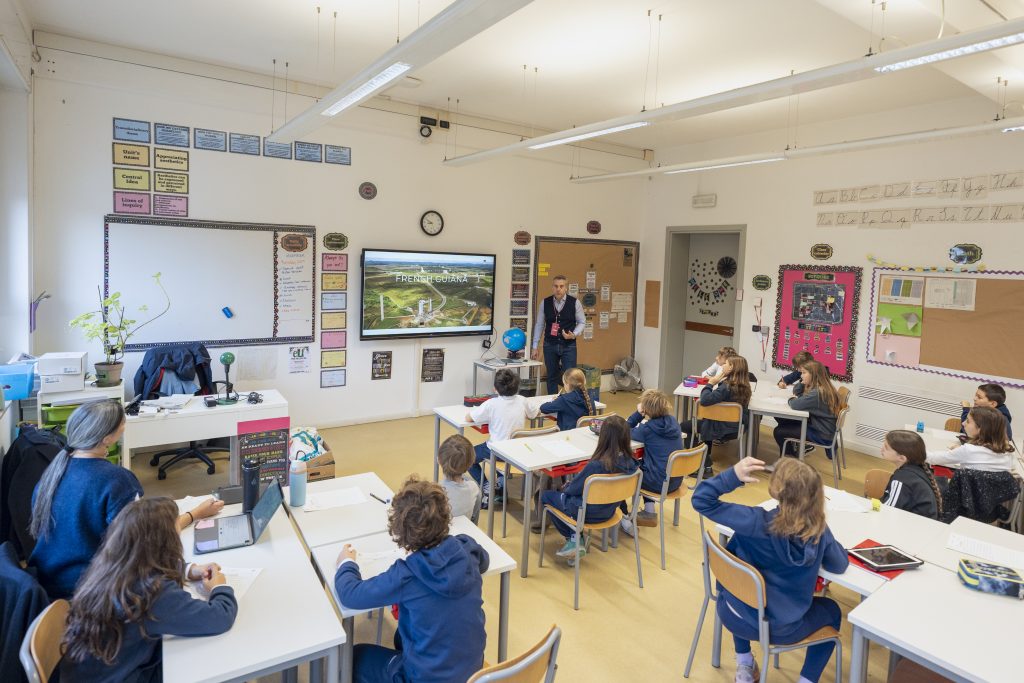
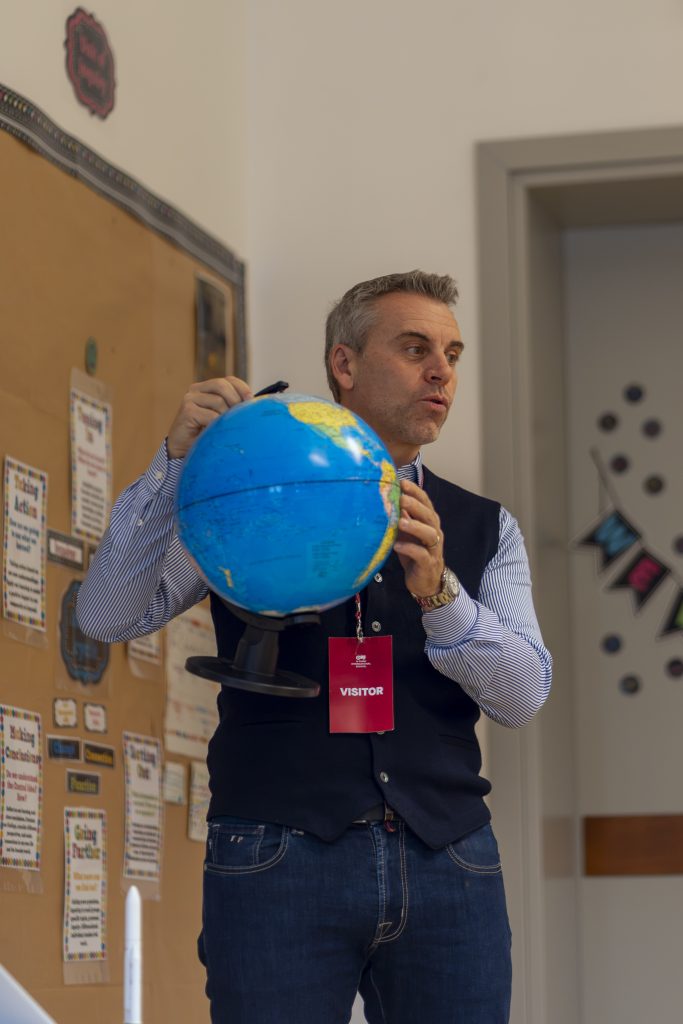
These are just two of the many questions the children asked during the lesson given by Mr Thomas Panozzo, an aerospace engineer. Thomas visited the Vicenza Campus as part of the unit of inquiry How the world works, to explain how rockets and satellites work and what they are for. The aim of the session: to help children understand how the world works beyond the boundaries of our planet, and to spark their passion and curiosity.
It all started with a simple idea: satellites are like eyes and hands watching over us from above. They track the weather, monitor the environment, locate every point on the planet, and even make our daily WhatsApp messages and emails possible. Then images and videos took the class on a tour of the solar system, until the moment everyone’s eyes lit up: the landing of the Rosetta probe on a comet. Launched in 2005, it circled the Sun, gaining speed with every loop, until it matched the comet’s trajectory and touched down on it in 2016, after an eleven-year journey.
Behind all this is part of Thomas’s work: the precise calculation of trajectories. Everything must be calculated to the second, and if the landing fails, another comet has to be chosen and all the studies redone from scratch. Thomas, after all, has not only studied rockets: he has worked hands-on on launches from French Guiana, a spaceport with as many as five launch pads. He showed the children how a rocket is built, almost like a construction game, and why we need a rocket and not a plane: to fly, planes need to burn fuel and need air.
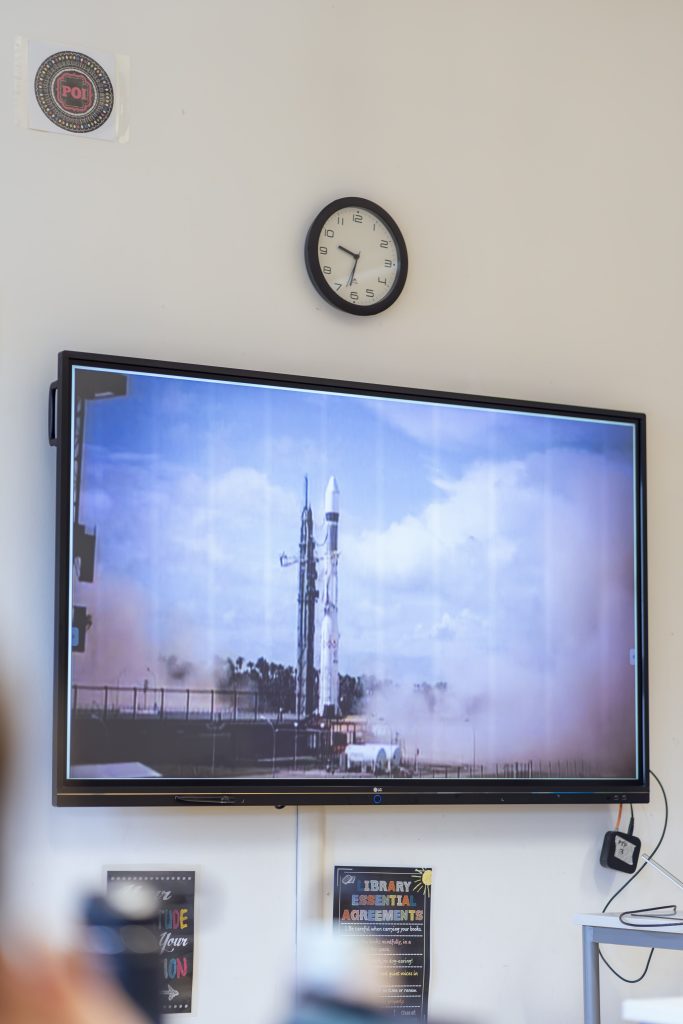
The most celebrated moment was the video of a launch, with the countdown called out loud by some of the children, eyes glued to the screen and, when the satellite was released into orbit, a spontaneous round of applause.
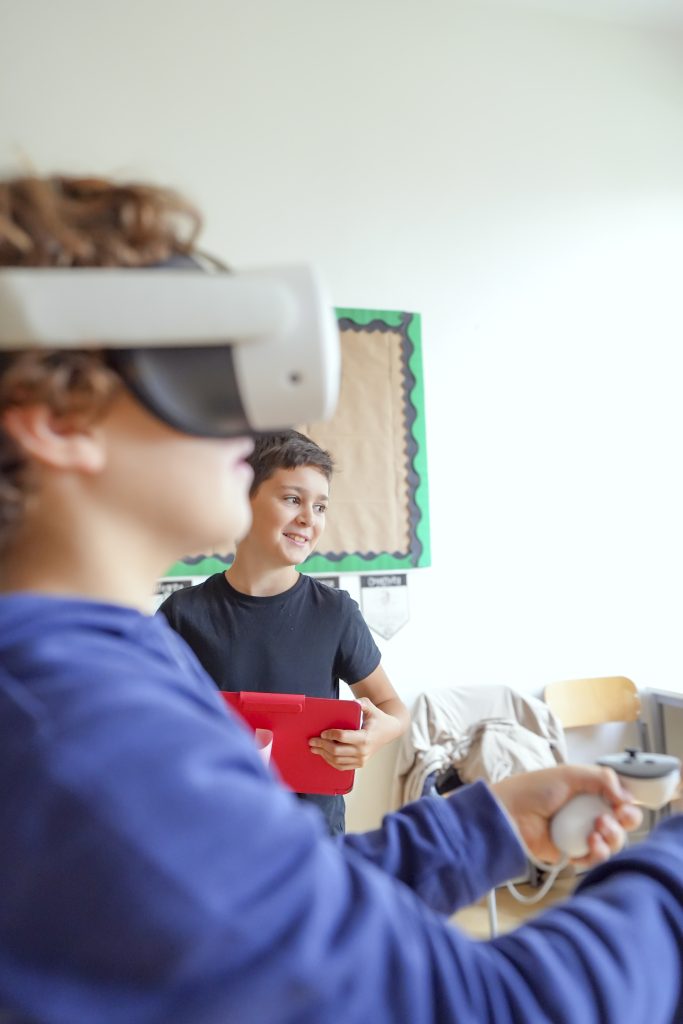
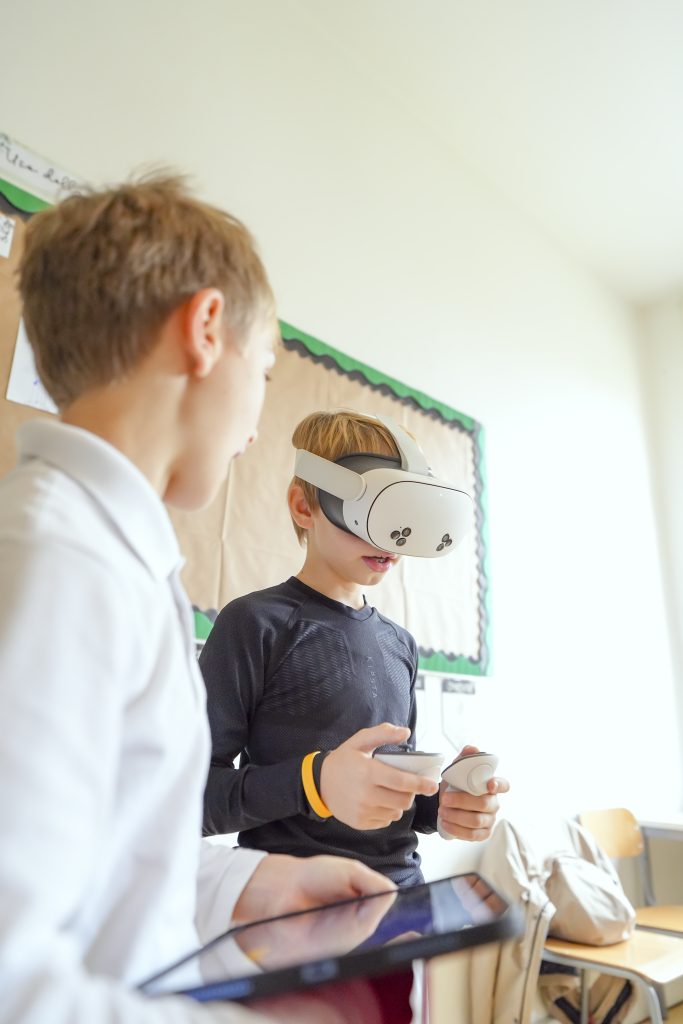
Continuing in the spirit of learning through hands-on experience, the journey went on with an immersive virtual reality (VR) workshop with Mr Davide Gusatto, Digital Design teacher. Wearing VR headsets, the children explored the International Space Station (ISS), observed the environments where astronauts live and work, and experienced what it feels like to move in microgravity. They took on four missions: finding the Cupola Observatory and then the shower to wash their hair; figuring out what’s on the menu at snack time and how to grab a bottle of ketchup; discovering how an astronaut keeps their muscles in shape; and finally, finding out where and how astronauts sleep. The aim was to show how different life up there is, and how the simplest everyday actions become different and complex. After hearing how space works, they got to step inside it.
Every space mission is prepared for years, calculated to the second, and measured against a precise goal. The goal of these experiences was both simple and ambitious: to excite the children and give them motivation and inspiration. Judging by the rapt faces, the questions and the final applause, the “launch” was a complete success. Who knows which future engineers, astronauts and scientists are already warming up their engines.
Mission accomplished, thank you Thomas and thank you Davide!



 Back

