Reading makes a difference: making time for stories in a fast-moving world
In a world that accustoms us to speed, where a flick of the thumb is all it takes to move from an image to a video, from one piece of news to the next, reading a book can seem a slow gesture, almost a countercultural one. Yet it is precisely in this slower time that children and young people learn to pause, to name their emotions and to shape their own way of seeing the world.
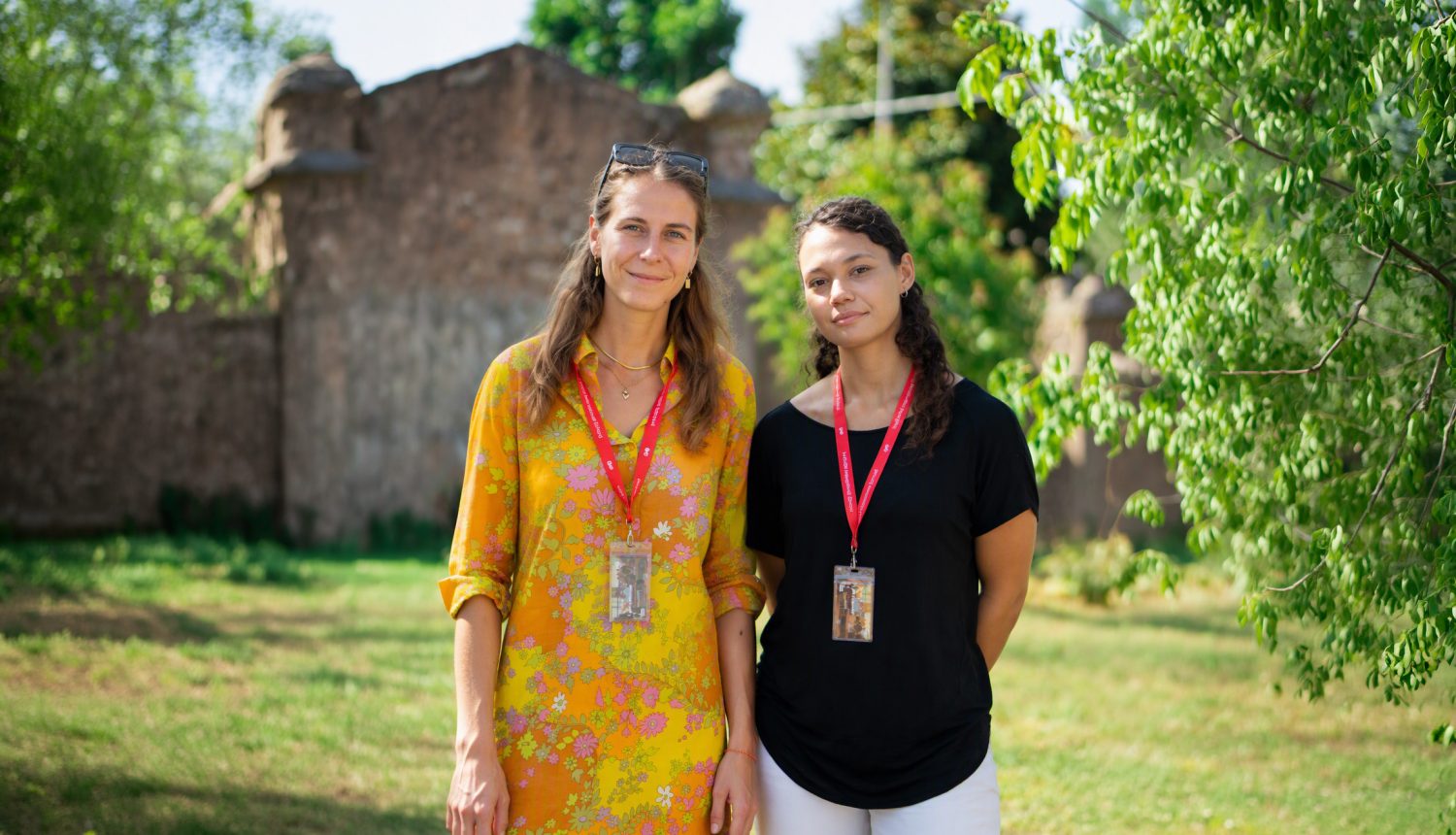
Ms Anna Torresin and Ms Francesca Moresco, Italian teachers at our Rosà Campus, reflect on the value of reading in children’s development and on the role that school and family can play in supporting young readers.
For our two teachers, reading gives children something precious: the time to pause and make sense of what they encounter. A story asks to be explored gradually, getting to know one character at a time. Words flow, events take shape page by page, and the young reader is invited to make connections, form hypotheses and ask questions. Rather than being handed everything ready-made, they take an active part in building meaning: within the space of a book, every young person can become the true protagonist of their own growth. Children need to engage with the world little by little, to take in what surrounds them and process it at their own pace. When every experience becomes a sensory overload, we risk losing sight of the value of this personal reflection.
Children deserve to lose themselves in their own thoughts without having to fill every moment. They deserve to change their minds and to discover that not every question has an immediate answer. Reading protects this possibility: it offers a place to explore, to go back and to be surprised.
Reading also means learning to put a name to things, and above all to emotions. Not every child naturally has the words to express what they feel, or to explain their unease when facing complex situations or delicate stages of life. In books, they meet characters who are afraid, who feel angry or lonely, or who are searching for the courage to ask for help. They discover that feelings can be contradictory and complex, but that this does not make them wrong or something to hide. In this sense, reading broadens their ability to understand both themselves and others.
Through the experiences of the characters they read about, young people can also engage with real problems and explore, in a safe space, the possible consequences of their choices. In doing so, they develop critical thinking before they face certain situations in real life. Reading also proves to be a deeply inclusive space: it does not ask everyone to understand in the same way, but welcomes the unique experience each reader brings.
Data from ISTAT (the Italian National Institute of Statistics) and AIE (the Italian Publishers Association) confirm how delicate this journey is. Between the ages of 6 and 9, the proportion of readers peaks at 70–75%, but with the onset of early adolescence (ages 10–14) the number of regular readers drops sharply. To counter this decline, it is essential to keep walking alongside young readers, offering an engaged presence and gentle guidance in their everyday encounters with books.
On this journey of growth, the family is a vital ally. ISTAT surveys show that more than 65% of young people read regularly when both parents are habitual readers, while the figure falls below 30% without that example. Yet we know that a silent example is not enough: what matters most is conversation and sharing. Parental support strengthens young people’s confidence in their reading abilities and their enjoyment of learning. When families sit down together to talk about the stories, characters and themes of a book, the pleasure of reading grows significantly. This helps young people hold on to books at precisely the age when it is easiest to be drawn into other pursuits.
At school, promoting reading should not simply mean assigning books or checking comprehension, but showing by example that reading is a pleasure rather than a task. At a time when our attention is constantly being pulled in different directions, it is important to teach that some experiences are valuable precisely because they ask us to slow down. A page read together, or a word that finally allows a feeling to be expressed, are small moments that can leave a lasting mark.
Teaching children to stop and listen to a story is one of the most meaningful ways to help them grow. Books are not a means of escaping the world or running away from reality, but a way to make sense of it: it is within their pages that young people find the words to express what they feel, learn to navigate a constant flow of stimuli and gain the awareness they need to engage with the world as active protagonists.





 Back

