Personal Project: from students to architects of their own learning
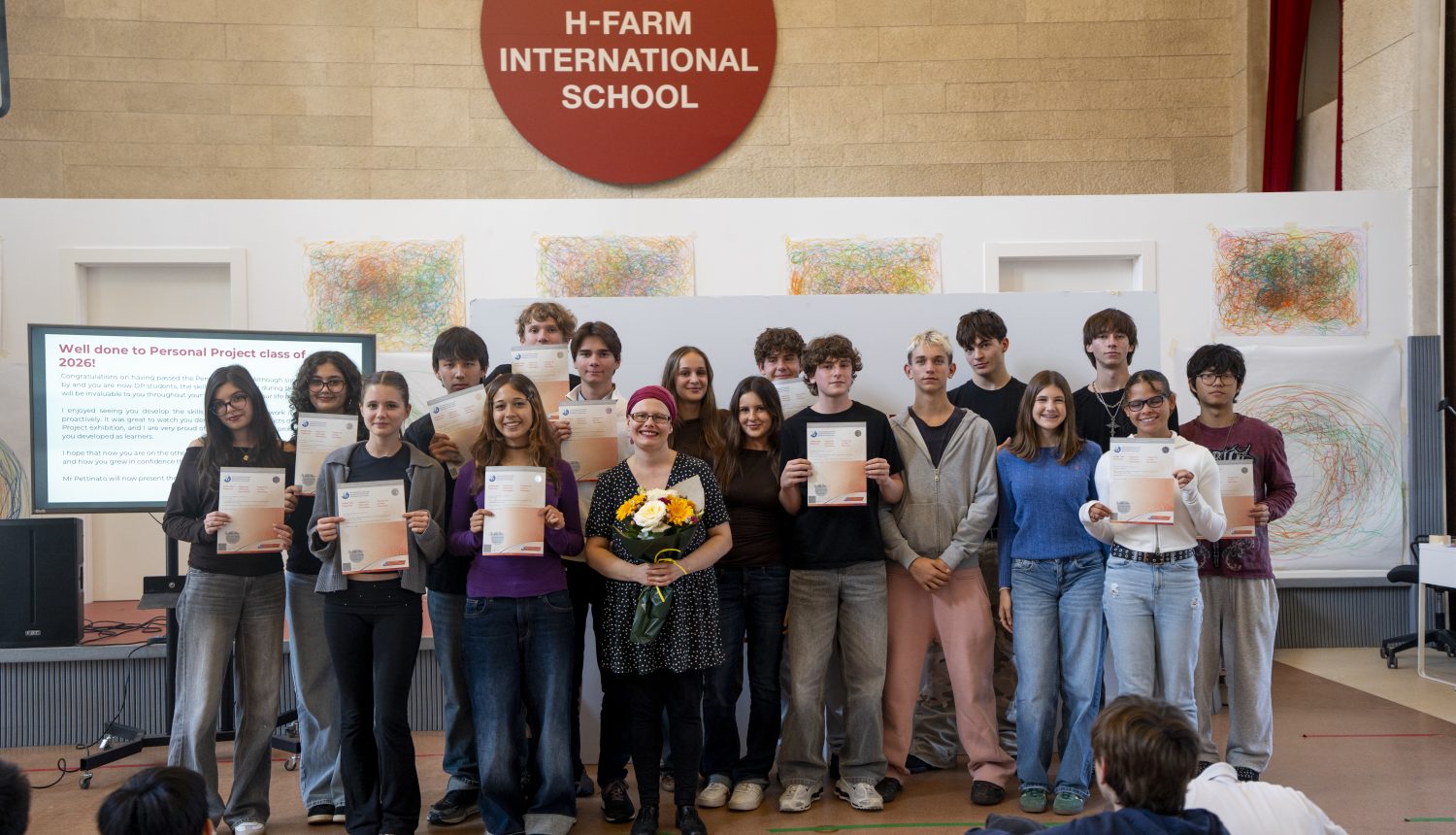
An average of 5.0, against a global average of 4.5: this is the result achieved by students at our Vicenza Campus in the 2025/26 Personal Project. It is an achievement that fills us with pride, and today we are celebrating it together at an assembly that brings students, teachers and parents together to share the satisfaction of a journey built on commitment, curiosity and dedication.
But what does it really take to move from following instructions to leading a project of your own? In the final year of the MYP, every student takes on this challenge through the IB Personal Project: a long-term, independent journey in which they choose what to learn, what to create and how to get there. Guiding students along the way is Ms Donna Kenyon, Personal Project Coordinator at our Vicenza Campus, who tells us in her own words what happens along the journey and what lies behind a result like this one.
“Every year, with the IB Personal Project, I watch a shift happen in the MYP5 classroom. For the first time, students are the curators of a project they manage themselves. They decide what they will learn and what they will create. Watching them navigate this transition, becoming young learners driving their own unique visions, is easily the most rewarding part of my job as Personal Project Coordinator at H-FARM International School Vicenza.
Students don’t just pull their goals out of thin air; we sit down together and figure out what genuinely interests them. This process can produce a rough diagram or a perfectly written statement. What matters is that the student is genuinely engaged and enthused.
With support, they distill the many things they want to learn into a clear learning goal, aligned with the product. Then comes the hardest hurdle: getting used to working autonomously. They do have deadlines, but in a long-term project they must manage their time wisely, create criteria and a coherent plan, and battle against their own procrastination.
As they develop this independence, they are quietly building a strong toolkit of lifelong skills. We focus heavily on research skills, but beyond that, students have free choice over the Approaches to Learning skills they develop, recording them in their process evidence: interview transcripts, plans, prototypes and annotated diagrams. The most important pieces will then feature in their final report.
As a coordinator, I teach the students as a class, discuss their ideas one-to-one and make sure they are on track. I also support their supervisors, so that they are clear on IB requirements and can give the right feedback at the right time. An important distinction is that we are there to look over their shoulder, not to hold their hand.
That independence is exactly what we want to be evident in their final work. The projects that earn the top marks are never the ones thrown together in a frantic weekend, but the result of steady, consistent effort. The standout students constantly check the criteria and make connections between what they did and who they are becoming as learners.
The Personal Project is also a bridge straight into the Diploma Programme: the stamina it takes to finish a long-term project, the discipline of proper citations and the formal structure of the writing are a great dress rehearsal for the Extended Essay.
When our students finally stand next to their completed work at the exhibition, the energy in the room is incredible. They haven’t just completed an assessment; they have created a whole project out of their own personal enthusiasm. At our celebration assembly, we share this moment with parents and younger students. Although they are now in the Diploma Programme, the lessons learned will always be with them, and I love that I have the opportunity to help them grow in this way.”



 Back
Back

