RoboMed 2026: Learning Through Challenge.
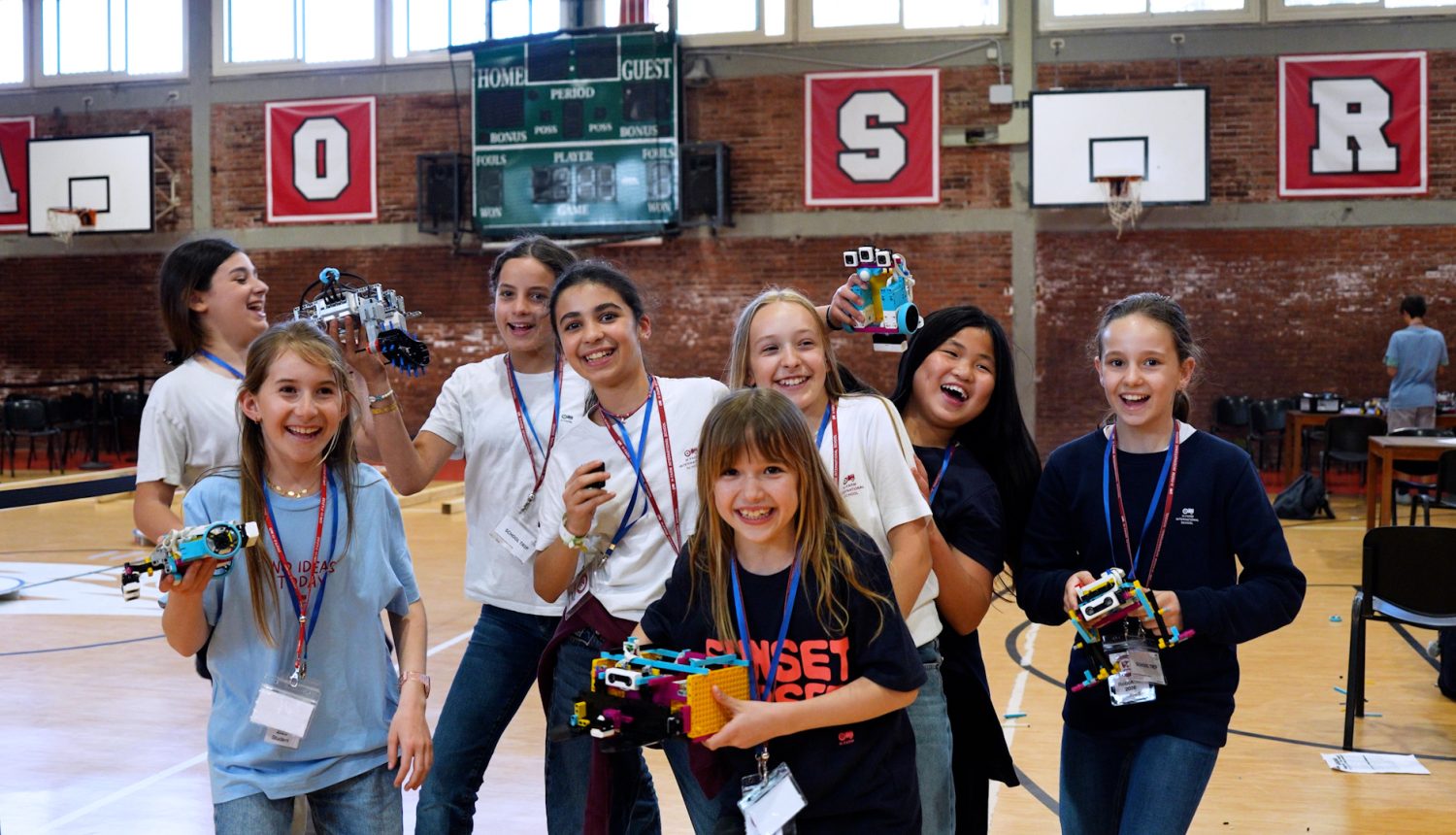
RoboMed 2026 has officially ended, but for the students who took part, what remains goes far beyond the final rankings.
For two intense days, on April 17th and 18th, the campus of the American Overseas School of Rome became the stage for this international robotics tournament that brought together teams from across the world. Among them, our students from H-FARM International School, from both the Venice and Vicenza campuses, arrived in Rome carrying months of preparation, expectations, and a mix of excitement and uncertainty.
RoboMed is structured as a real tournament, unfolding over two phases, each with a distinct role in shaping the experience. The first day was dedicated to preliminary rounds: no eliminations, but a series of matches and races that allowed every team to compete multiple times, accumulate points, and, most importantly, understand how their robots performed under real conditions. It was a phase of observation, adjustment, and calibration, where each run provided immediate feedback and every mistake became a starting point for improvement.
The second day shifted the dynamic entirely. The elimination rounds introduced a different kind of pressure, where each race could determine whether a team would advance or not. By that point, there was little room left for experimentation: what had been tested, fixed, and refined the day before now had to work.
Across both days, students competed in a wide range of races and matches: from line following and obstacle courses to speed races, aquatic challenges, and sumo-style robot battles, each requiring a different balance of design, coding, and strategy. Every run lasted only a few seconds, but behind those seconds there were hours of testing, adjustments, and problem-solving.
Among all the challenges, the Aquatic one stood out as one of the favourites even though it was also one of the most demanding. Unlike the others, it required students to rethink their approach entirely: designing a robot that could float while remaining fully functional meant balancing structure, buoyancy, and protection of the electronic components. Any contact with water could compromise the circuit and stop the robot completely. Something that, in fact, happened to several teams during the competition.
And yet, that’s what made it so engaging.
It was new, unpredictable. Even for students who had spent months preparing through RoboQuest (our internal robotics competition) this was something they had never done before, and precisely for this reason it became so stimulating. It forced them to think differently, to experiment, to find solutions they hadn’t considered, like one of our MYP teams (the Teen Titans), who experimented with using balloons to support flotation.
For the Vicenza team, the “Wildcats,” the aquatic challenge became one of the defining moments of the competition. After an initial attempt that did not go as planned, they managed to rethink their approach and come back stronger, eventually winning the race during the first day. That same event saw another highlight on the second day, when the Venice team “Fire Bolts” won one of the races, marking a shared achievement across campuses.


These moments of success, however, were only part of a much more complex journey.
There were also many setbacks: robots that failed to start, runs that didn’t deliver the expected results, and the frustration that comes when effort doesn’t immediately translate into success. Some of the younger students experienced these moments very intensely, but what stood out was their ability to recover, reset, and try again.
Through adjustments and persistence, the teams improved their performance in subsequent runs, demonstrating how progress often comes from navigating difficulties rather than avoiding them. This same resilience also led to strong performances, such as in the line following challenge, where the Venice teams achieved an important result, winning one of the races and demonstrating precision and control.
As highlighted by Flika Martha Carvalho Malekane, who has followed the students throughout their preparation, the progress was already visible before the competition even began: months of consistent work, experimentation, and collaboration had built the foundation for everything that happened in Rome.
For Owen Francis McComasky, the experience carried a strong emotional impact. Watching students face challenges, adapt, and support each other marked what he described as one of the most meaningful moments of their journey.
Because RoboMed is not only about performance, but also about how students relate to the experience and to each other.
For many of them, the most meaningful part of the experience went beyond the competition itself. When asked about their favorite moments, students didn’t always point to results, but to the challenges they enjoyed the most and the people they shared them with. Zahara, Giulia and Gioele, for example, highlighted the Aquatic race, while Solomia and Lucrezia mentioned the Obstacles challenge as particularly engaging. But just as important was the opportunity to spend time together, strengthen friendships, meet students from other schools, and exchange ideas, approaches, and solutions.
Throughout the event in fact, there were numerous moments of collaboration between teams, also from different schools. Students shared ideas, helped each other troubleshoot problems, and built connections that went beyond competition. This spirit of openness and mutual support is not only encouraged but also recognized within the event itself, reinforcing the idea that robotics is as much about teamwork as it is about technical skill.
In this sense, RoboMed becomes more than a competition: it becomes an open environment of exchange, where collaboration, curiosity, and mutual support are just as valuable as technical performance.
Outside the competition arena, students had the opportunity to explore the city, walking through some of Rome’s most iconic landmarks, from the Trevi Fountain to the Pantheon and Piazza Navona. These moments added another layer to the trip, balancing the intensity of the competition with discovery, curiosity, and shared memories.
A special thanks goes to the team of teachers who made this journey possible, not only preparing the students over the past months, but also guiding and supporting them throughout the experience: Owen Francis McComasky, Flika Martha Carvalho Malekane, Christopher Alexander Camacho, Anthony Hamblin, Stefania Pasquali and Davide Gusatto.
There were winners, rankings, and scores but what truly remains goes beyond that: the ability to think through problems, collaborate effectively, and adapt in real time.
An experience that goes beyond competition, becoming part of how students learn, grow, and face new challenges.





 Back
Back

