PYP Exhibition 2026: Ideas, Passions, and Visions for the Future
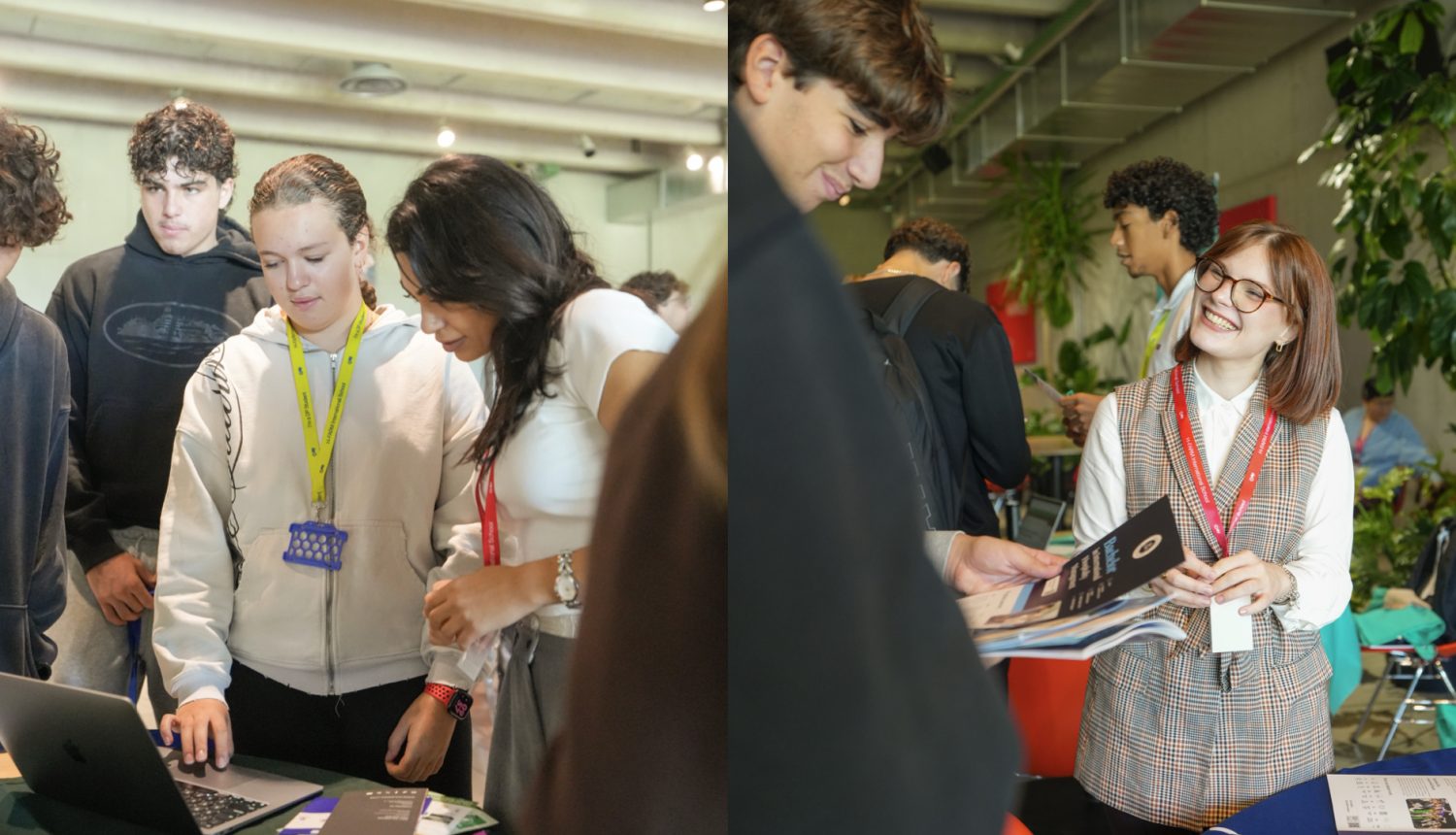
There is a moment every year when classrooms and hallways stop looking like a school and start looking like something else: a fair, a small TED stage, a neighborhood of miniature researchers. It happens at the end of May, when the PYP Exhibition arrives: two days in which Year 5 students take the floor and share with the world what they have discovered. This year it took place on May 21 and 22 at our Venice campus, and anyone who came to visit left with the same familiar feeling: these students have something to say, and they know it.
The PYP Exhibition is the final chapter of the Primary Years Programme, but calling it a “final-year showcase” would not do it justice. It is, rather, the first time children truly choose for themselves what they want to become experts in. We do not assign them a topic: we let them find it. The journey begins with a genuine question, something that touches them, sparks their curiosity or, at times, even makes them angry, and from there it unfolds through research, interviews, prototypes, and rethinking. It is certainly an exercise in autonomy, but above all in awareness: understanding what you want to understand is already half the work.
Along the way, students put the qualities of the IB Learner Profile into practice almost without realizing it. They become thinkers when deciding which sources to trust; communicators when trying to explain their discoveries to parents; risk-takers when stepping in front of a real audience; caring when choosing to focus on those who do not have a voice. These are the same values that run through the entire IB programme, and in the Exhibition they can finally be seen in action, all at once.
The topics explored this year were extraordinarily diverse. On the environmental front, Prince addressed the issue of plastic in the oceans, reminding us that every minute more waste enters our seas and that animals such as turtles mistake plastic fragments for food. Also in the area of sustainability, Riccardo, Gioele, and Pietro proposed a list of everyday actions to save water, reduce the impact on ecosystems, and choose more sustainable means of transport such as bicycles. Leonardo also presented his creative paper recycling project, showing how waste materials can be transformed into bookmarks, cards, and unique handmade objects.
Among the most ambitious projects was Clara’s, dedicated to the smart city of the future. Starting from a striking fact, that nearly two-thirds of the energy produced worldwide is wasted before being transformed into useful services, Clara imagined and designed her own “Intelligent City,” an energy-efficient, healthy, and meaningful urban environment. Solar, wind, biofuel, and hydro energy coexist with buildings covered in vertical greenery, sustainable mobility systems, and playgrounds that generate energy through children’s movement. But her work did not stop at the vision itself: Clara also developed a real app, “Clara’s Intelligent City,” designed to help citizens make more conscious daily choices, complete with a leaderboard of green actions and scores awarded to those contributing the most to the community. What makes Clara’s project even more fascinating is the bridge she built with the past: to give depth to her idea, she studied Leonardo da Vinci’s ideal city, exploring his flying machines, from the aerial vessel to the ornithopter, as well as his studies in anatomy, botany, and engineering. A fascinating dialogue between the genius of the Renaissance and the environmental urgency of our time, captured in her motto: “Your energy, our future.”
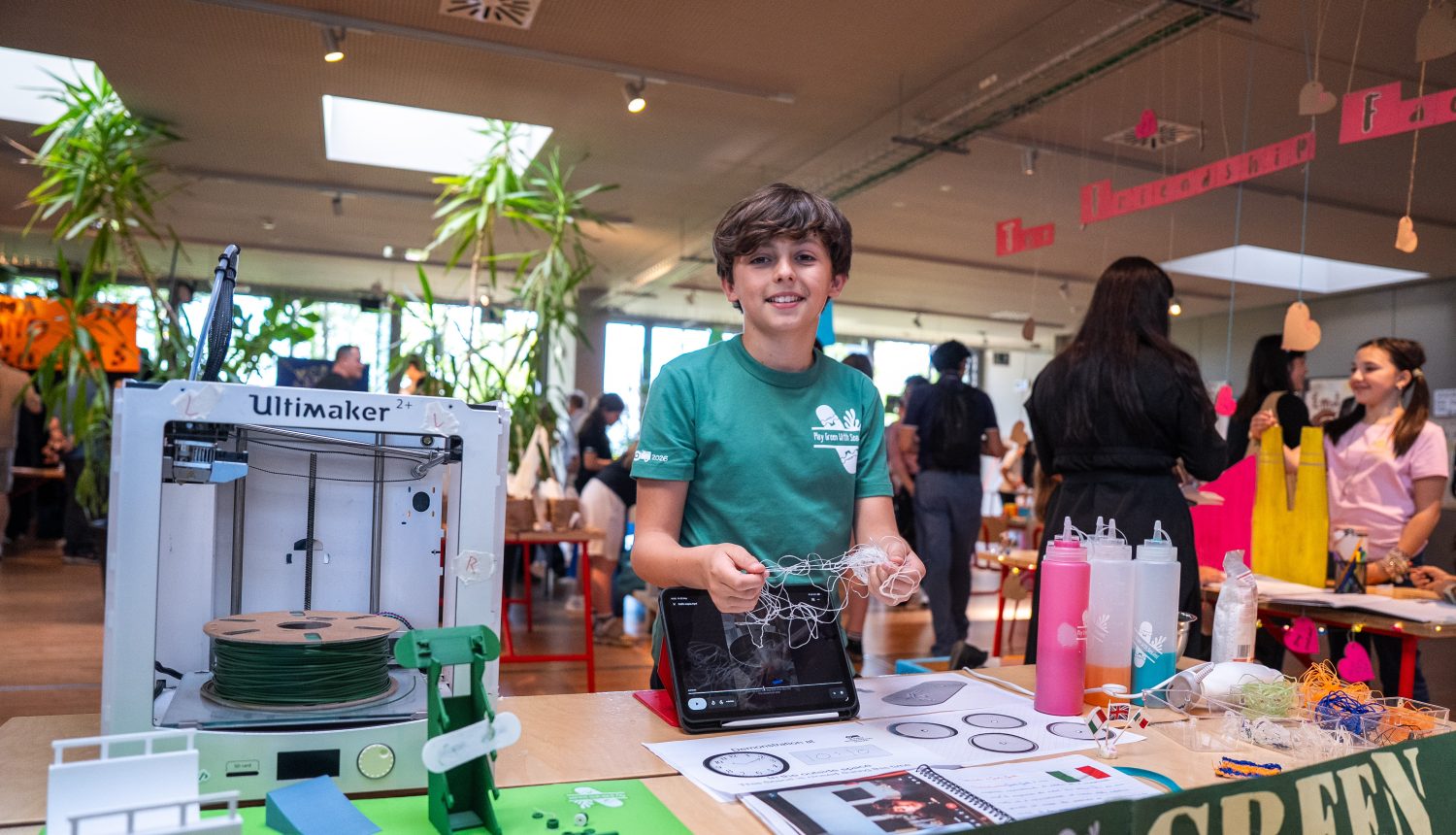
Sebastian, meanwhile, chose a far less conventional path: instead of simply describing the problem of plastic, he tried to replace it. He wondered whether it would be possible to create a truly biodegradable 3D printer filament, and found the answer in something that lies quite literally before our eyes every summer: seaweed. At his stand there were not just posters to read, but a fully active laboratory table. Sebastian measured sodium alginate (a powdered seaweed extract) and, once hydrated with glycerine, diluted it with one and a half liters of water. Then came the spectacular part: all it took was dropping the liquid into a basin of calcium chloride, and the filament formed instantly, right there in front of the audience, like a small piece of chemical magic.


Health and well-being were at the center of many other projects. Olivia chose to explore the world of bees and their importance for ecosystem balance: “Bee Happy,” the title of her project, is an invitation to look at these tiny insects with new eyes, supported by an interactive digital resource designed to raise awareness. Max and Sveva, on the other hand, chose to communicate through play and physical experience: Max recreated a giant child-sized version of the game Operation at his stand to explain what it means to live with Type 1 diabetes, while Sveva guided visitors through live first aid demonstrations. Ava, Giada, Manon, and Eliza worked together on celiac disease, gluten-free nutrition, and a new food pyramid based on quality rather than quantity. Emily instead explored the world of emotions, creating games and tools to help recognize and manage them.
There was no shortage of projects connected to children’s social and civic lives. Tara and Jessica decided to address the themes of friendship and bullying, offering practical advice on how to handle difficult situations. Another student explored the role of governments in everyday life, explaining how parks, hospitals, and schools exist thanks to collective decisions. David focused on financial education, starting from the observation that schools rarely teach students how to manage money. Finally, two separate projects by Giulia and Pavel tackled the issue of excessive screen time, reminding everyone how important it is to experience the small moments of real life too.
Describing every project from this year would require an entire book, but the thread connecting them is clear: every stand was born from a real question, chosen by the student presenting it. And behind every question there is a network that supported it.
Of course, none of this would have been possible without the quiet work of those around them: the teachers who guided the process without ever replacing the children, the families who offered contacts, experiences, time, and listening, and the classmates who gave one another feedback while learning the difficult art of asking the right questions. A small community that came together so each project could express its very best.
At our school, one certainty remains: these children are already ready to play their part. They have ideas, they have the courage to express them, and, most importantly, they are eager to take action. The PYP Exhibition does not close a chapter: it opens a new one, much longer and far more exciting. And to our Year 5 students goes our deepest thanks, together with everyone who made this experience possible.





 Back
Back

